When the California Supreme Court upheld Prop 8, prominent, gay, conservative blogger who prides himself on constantly trying to see what's in front of his nose, wrote in a post titled: Prop8 Ruling: The Right Call that it was a "perfect decision" since "It would have been dreadful if voters were retroactively told their valid vote was somehow null and void - it would have felt like a bait and switch and provoked a horrible backlash." Sullivan's a blogger I read quite often. He's always passionately opinionated - right on many issues, badly wrong on a few very important ones like the Iraq War (which he backed vociferously and then, to his credit, apologised for) and just plain, egregiously nasty on some - like his support for removing the transgender community from ENDA.
He's a bit of a lapsed conservative who clambered onto the Obama's bandwagon early on - at least partly because of his apparently deep detest for the Clintons - but his roots show every now and then, as in his reaction to the California SC Prop 8 ruling, which harks back to the ridiculous position of many conservatives in the US that people's will must supersede the courts' even on a question related to fundamental rights. The post surprised me because if nothing else Sullivan claims to be a keen observer and advocate of democracy (witness his vigorous and useful support for the Green Revolution in Iran last year and his posts in support of the "Ground Zero Mosque")- apparently he sat through only half the civics 101 lesson related to democracy being about the rule of the majority while skipping the part about minority rights being guaranteed.
Having ecstatically welcomed both the initial gay marriage ruling by the California SC and then in a more muted way Judge Walker's recent ruling invalidating Prop 8 - Sullivan should really be admitting to being wrong - in welcoming the ruling that upheld prop 8 and wrong in his understanding of how a democracy should work. You can't be the most prominent conservative, gay blogger on the internets writing primarily on politics and policy and be so wrong without admitting it, if you are to retain your credibility. And if doesn't think he was wrong, then it would be a great idea to state that as well and have his reader's debate him on the merits of his position.
Appending his original statement welcoming Prop 8 being upheld to his recantation would be a great idea. I've linked to it in case he has trouble locating it in the prolific archives of the Daily Dish.
Tuesday, August 24, 2010


Monday, August 23, 2010
The Newly Type B Kids on the Block
 So many flowers to smell, so little time
In an interesting article, a Japanese professor argues that there might be a sociological explanation for Japan's twenty years of economic stagnation - beyond a compulsive savings nature that is after all common to many other Asian societies. He posits a novel idea: that Japan is becoming a society that has outgrown growth; where the young, growing up in an aging, shrinking society and a warming world are increasingly frugal non-consumers and if that means that they end up being a smaller (though very prosperous) power, then that's just fine with them. And in any case, its slowly shrinking population could lift Japan's GDP per capita, already sky-high, even with no actual growth. In a sense he's saying Japan is transforming into a Type B personality quite distinct from Type A countries like the US, China or India or even its own relatively recent, hyper-competitive past. Instead it may be on its way to becoming, sociologically speaking, the Eastern-most member of Western Europe - several of whose nation states have also come to peace, in the last decade, with marginal growth rates (albeit at very high GDP per capita levels) and stable to shrinking populations. Western European nations don't seem to see GDP growth as a validation of a self-important self-image or an expression of their suppressed martial urges but as a means to providing their populations with a higher standard of living. Beyond a point, several have chosen to give their workers more paid days off in a year than increase productivity and GDP growth rates. Seen this way, Japan isn't suffering from a twenty year malaise but has simply opted out of the rat race, having gotten where it needed to get to. So they're trading in yen they could get in the future for some more zen in the present. It's an intriguing argument - can an entire society give up greed - and in doing so, collectively find greater inner peace?
Whether the writer is right or not about Japan, I suspect he is correct in his lateral suggestion that outgrowing growth might be the only sustainable option "in a world whose limits are increasingly apparent".
Tuesday, August 17, 2010
A Very Long Engagement
And A Very Long Post. :( I did try to shorten it, I promise I did
What’s in a name, the Bard famously asked a couple of centuries ago. And today that refrain has been taken up by those members of the religious right who just cannot und erstand why domestic partnerships or civil unions in states like California or New Jersey aren’t good enough for the gay community. Why do they need to horn in on an institution that for eons and in nearly every civilization known to man, has undeniably involved a commitment between a man and a woman. Some of my straight friends, all liberal, have asked me the same question. And when I first moved to the US from India, fresh out of the closet, I kind of agreed with them. I didn’t think it was really important to call a domestic partnership a marriage. Let me explain.
It took me some time to fully absorb the fact that I’d moved to a place where virtually nobody cared about your sexual orientation – unless they were sizing you up for a date or a hook-up. It first hit me that I wasn't in Kanpur anymore, when after a full day of apartment-hunting, I found one that I loved: a fourth floor walk-up with warm,worn hardwood floors, no dish-washer and a view of the Golden Gate. As we walked down the four floors, I told the realtor that I wanted to rent it. Then I told her was gay and asked her if this was something we needed to reveal to the apartment-owner in case he didn’t want to rent to gay people, since I’d hate to star in an eviction drama on local news. My coming out did not faze her a bit, but my question clearly took her aback. When she recovered, she told me, firmly, that my being gay was none of the landlord’s business and that anyway there were anti-discrimination laws that prevented him from refusing to rent the apartment to me. Over time as I learned of all the other protections, and the freedoms – no – the Freedom, available to me to live like any other person, in California, it just seemed greedy to quibble over whether two lovers’ union should be called marriage or domestic partnership – specially when all the benefits were the same.
I was OK with joining up with the folks demanding gay marriage because to me it was a civil rights issue. I could see that the opposition, despite the welter of rational-sounding irrational reasons they put forward, really just felt that heterosexuals were better than homosexuals and wanted to validation for their feelings in the form of a discriminatory marriage law. It made sense to oppose such bullying, just as it makes sense to oppose attempts to block a mosque near Ground Zero. Despite being in favour of same-sex marriage, I didn’t really think it made a difference to me personally. My (over?)-healthy self-esteem, I felt, allowed me to not care what the opposition thought of domestic partnerships. As I saw it, when I found the right guy, we could probably have any kind of religious or secular ceremony we wanted; I was blessed with family and friends who would still attend and who would consider it as important a wedding as theirs; and the only thing that would be different would be a few words on a document that we’d never look at, after the day of.
That started changing when the first decision legalizing gay marriage was handed down by the California Supreme Court. I remember whooping with joy as goose-bumps clambered up and down my back. But I also suddenly felt scared. I was quite ready for a domestic partnership but somehow marriage seemed to have a whole lot more responsibility associated with it; something I hadn't felt until I was given access to it. It was a small shock to learn that I had the same attitude vis-a-vis marriage and domestic partnerships as the conservatives on the other side. I realized that while I understood marriage viscerally - having grown up in it and with it - I only had an intellectual understanding of a DP.
Yes, legally a California DP is exactly the same as a marriage where state law is concerned – but we don’t live in courts. We live in condominiums. In class-rooms and cafes. In all those places, we grow up laughing, talking, crying and learning about love and marriage, not love and DPs. Whether we accept or reject marriage as an institution, we involuntarily absorb and come to understand the value that society places on marriage. My self-esteem hadn't immunised me to social conditioning. My brain still told me that a DP was exactly the same as a marriage - at least at the state level. But that did not ring true for me anymore. Much as I disliked admitting it - marriage, to me, was a more important, more serious commitment. I knew it because my gut told me so.
A few months ago, bereft again of the option to marry, post-Prop8, I found out that my friends, liberals like me, have the same opinion-versus-attitude dissonance as I did. And are unaware of it just as I was. I was at a dinner at one of my closest friend’s house. He’d recently fallen in love with a wonderful girl. I haven’t known her for long but you can tell she’s not just good people. She’s very good people. He is Indian (let’s call him Ritesh) and she is American (let’s call her Angela). Both are as liberal as they come. As the party broke up, they saw us off to the door and as we were saying goodbyes, one of them happened to mention that they’d gone to City Hall that morning and become domestic partners. Astonished by the news and delighted for my friend, I instantly congratulated them on this huge step in their relationship. And then asked why they hadn’t said anything till then, and why we hadn’t celebrated the event. Ritesh shrugged. It was really just to help Angela get on his health plan, he said.
It took a few moments for this to compute. He was saying it didn’t necessarily mark a new step in their relationship – it was more like letting a girl-friend use your car when hers breaks down. I don't think they noticed - but I felt my face redden - I felt embarrassed and foolish. Embarrassed for having thought that their relationship was further along (effectively married!) - than it was. Foolish because, while for me entering into a DP was still a very significant commitment, for them it was less consequential than getting a driver’s license (something that would have merited a mention and a high-five, way earlier in the evening). I felt a bit like an colonial era African chief who, having happily settled for important-looking, colourful beads in exchange for his lands, steps out to find the polite settler kids playing a game of marbles with beads just like his.
When I asked Ritesh if he’d told his parents, he said he had but they hadn’t quite understood what a DP was, and so he told them it was like getting engaged. I didn't point out that it was considerably less than an engagement, really, since it was sans rings, celebrations or excited descriptions of the moment the proposal was made. Hell, it was sans a proposal! But I did think that he was in the right ball-park about a DP's visceral importance relative to marriage, for many, many people. It's really just an engagement.
Del Martin and Phyllis Lyon, the first LGBT couple married by Mayor Newsom in 2004, were together for 53 years. As any woman would attest and many men will admit - that is a very long engagement.
And not something that anyone - gay or straight, American or Indian or Aleutian - would want for themselves. Or put up with.
What’s in a name, the Bard famously asked a couple of centuries ago. And today that refrain has been taken up by those members of the religious right who just cannot und
erstand why domestic partnerships or civil unions in states like California or New Jersey aren’t good enough for the gay community. Why do they need to horn in on an institution that for eons and in nearly every civilization known to man, has undeniably involved a commitment between a man and a woman. Some of my straight friends, all liberal, have asked me the same question. And when I first moved to the US from India, fresh out of the closet, I kind of agreed with them. I didn’t think it was really important to call a domestic partnership a marriage. Let me explain.It took me some time to fully absorb the fact that I’d moved to a place where virtually nobody cared about your sexual orientation – unless they were sizing you up for a date or a hook-up. It first hit me that I wasn't in Kanpur anymore, when after a full day of apartment-hunting, I found one that I loved: a fourth floor walk-up with warm,worn hardwood floors, no dish-washer and a view of the Golden Gate. As we walked down the four floors, I told the realtor that I wanted to rent it. Then I told her was gay and asked her if this was something we needed to reveal to the apartment-owner in case he didn’t want to rent to gay people, since I’d hate to star in an eviction drama on local news. My coming out did not faze her a bit, but my question clearly took her aback. When she recovered, she told me, firmly, that my being gay was none of the landlord’s business and that anyway there were anti-discrimination laws that prevented him from refusing to rent the apartment to me. Over time as I learned of all the other protections, and the freedoms – no – the Freedom, available to me to live like any other person, in California, it just seemed greedy to quibble over whether two lovers’ union should be called marriage or domestic partnership – specially when all the benefits were the same.
I was OK with joining up with the folks demanding gay marriage because to me it was a civil rights issue. I could see that the opposition, despite the welter of rational-sounding irrational reasons they put forward, really just felt that heterosexuals were better than homosexuals and wanted to validation for their feelings in the form of a discriminatory marriage law. It made sense to oppose such bullying, just as it makes sense to oppose attempts to block a mosque near Ground Zero. Despite being in favour of same-sex marriage, I didn’t really think it made a difference to me personally. My (over?)-healthy self-esteem, I felt, allowed me to not care what the opposition thought of domestic partnerships. As I saw it, when I found the right guy, we could probably have any kind of religious or secular ceremony we wanted; I was blessed with family and friends who would still attend and who would consider it as important a wedding as theirs; and the only thing that would be different would be a few words on a document that we’d never look at, after the day of.
That started changing when the first decision legalizing gay marriage was handed down by the California Supreme Court. I remember whooping with joy as goose-bumps clambered up and down my back. But I also suddenly felt scared. I was quite ready for a domestic partnership but somehow marriage seemed to have a whole lot more responsibility associated with it; something I hadn't felt until I was given access to it. It was a small shock to learn that I had the same attitude vis-a-vis marriage and domestic partnerships as the conservatives on the other side. I realized that while I understood marriage viscerally - having grown up in it and with it - I only had an intellectual understanding of a DP.
Yes, legally a California DP is exactly the same as a marriage where state law is concerned – but we don’t live in courts. We live in condominiums. In class-rooms and cafes. In all those places, we grow up laughing, talking, crying and learning about love and marriage, not love and DPs. Whether we accept or reject marriage as an institution, we involuntarily absorb and come to understand the value that society places on marriage. My self-esteem hadn't immunised me to social conditioning. My brain still told me that a DP was exactly the same as a marriage - at least at the state level. But that did not ring true for me anymore. Much as I disliked admitting it - marriage, to me, was a more important, more serious commitment. I knew it because my gut told me so.
A few months ago, bereft again of the option to marry, post-Prop8, I found out that my friends, liberals like me, have the same opinion-versus-attitude dissonance as I did. And are unaware of it just as I was. I was at a dinner at one of my closest friend’s house. He’d recently fallen in love with a wonderful girl. I haven’t known her for long but you can tell she’s not just good people. She’s very good people. He is Indian (let’s call him Ritesh) and she is American (let’s call her Angela). Both are as liberal as they come. As the party broke up, they saw us off to the door and as we were saying goodbyes, one of them happened to mention that they’d gone to City Hall that morning and become domestic partners. Astonished by the news and delighted for my friend, I instantly congratulated them on this huge step in their relationship. And then asked why they hadn’t said anything till then, and why we hadn’t celebrated the event. Ritesh shrugged. It was really just to help Angela get on his health plan, he said.
It took a few moments for this to compute. He was saying it didn’t necessarily mark a new step in their relationship – it was more like letting a girl-friend use your car when hers breaks down. I don't think they noticed - but I felt my face redden - I felt embarrassed and foolish. Embarrassed for having thought that their relationship was further along (effectively married!) - than it was. Foolish because, while for me entering into a DP was still a very significant commitment, for them it was less consequential than getting a driver’s license (something that would have merited a mention and a high-five, way earlier in the evening). I felt a bit like an colonial era African chief who, having happily settled for important-looking, colourful beads in exchange for his lands, steps out to find the polite settler kids playing a game of marbles with beads just like his.
When I asked Ritesh if he’d told his parents, he said he had but they hadn’t quite understood what a DP was, and so he told them it was like getting engaged. I didn't point out that it was considerably less than an engagement, really, since it was sans rings, celebrations or excited descriptions of the moment the proposal was made. Hell, it was sans a proposal! But I did think that he was in the right ball-park about a DP's visceral importance relative to marriage, for many, many people. It's really just an engagement.
Del Martin and Phyllis Lyon, the first LGBT couple married by Mayor Newsom in 2004, were together for 53 years. As any woman would attest and many men will admit - that is a very long engagement.
And not something that anyone - gay or straight, American or Indian or Aleutian - would want for themselves. Or put up with.
Sunday, August 15, 2010
Strumming Her Pain into My Fingers
A Paean to a Plaintive Melody
I stumbled into Sheryl Crow four years ago in Macy's at Union Square. The sorrow in her voice in "The First Cut is the Deepest" scythed through the mall chatter and into my consciousness. It took a few more moments for the lyrics to register and then suddenly I couldn't focus on deciding between three different, equally unimaginative towel collections. I remember turning around and looking up at the ceiling from where the music was being piped into the room. Being smart-phone-less at the time I had to memorise some of the lyrics and it was only after I got home that I was able to google them, discover the artist and fully hear the song that had had the effect of an acupuncturist's needle being tapped into a sore spot - producing sharp pain followed by a throbbing relief. I captured it forever onto my iPod. I began to research Sheryl Crow - that is, I looked up her profile on wikipedia - and came across more songs that I grew to love. The effervescent "Soak up the Sun" quickly became a standard accompaniment to a sunny mood while the mournful strumming and despair infused lyrics of "My Favorite Mistake" somehow seemed to make it perfect for quiet walks back home on cold, low sky-ed, foggy nights. Finding out that a song is self-referential generally endears it to me. The First Cut is the Deepest didn't seem to have much of a back-story but I discovered that Eric Clapton was Crow's favourite mistake. And that meant that the song quickly became the most played one in my ballads playlist.
It doesn't take much for me to love an artist and start sifting through her repertoire for treasure. Three good songs and an interesting (read loss or pain edged) life-story are pretty much all it takes. Having found three songs that I loved, I fast-tracked through a whole host of songs from Crow's past deemed worth listening to, by her Wikipedia profile, but nothing more caught my ear. What surprised me was that though she did pain, loss, sorrow, loneliness and other sad emotions more consistently and better than anyone else I'd heard, melancholy was missing from her music. Until, four years into liking her, I finally listened to "Strong Enough" without multi-tasking through it. It had resided on my iPod for some time without making its way into one of my playlists. Which meant I'd only heard it a couple of times. Its one of her more prominent hits and so I have no idea why I hadn't paid attention to it before.
The song is suffused with plaintiveness - you can hear it in Crow's voice, read it in the lyrics and feel it in the strumming. You might have noticed, dear reader, until last week I hadn't written for almost a year. For months there had been not a single sentence twisting around in my barren mindscape. More recently, there had been a few fragments - but they just never joined up to form a complete thought - no matter how long or how often I played my melancholy playlist. That playlist, you might remember, usually does the trick when I'm trying to write. It hadn't been doing its magic these past months. Last week as I listened to Strong Enough, I saw tendrils begin to emerge from the lonesome fragments - my very own green shoots of (literary) recovery - that began to hook together as the fragments coiled past each other. Those few sentences were enough for me to sit down and start typing in time to Crow's pain-stoked, pain-soaked chords - typing out a composition. Not a very good one and not my best, but a composition nonetheless. After almost a year.
So now Sheryl Crow is one of my favourite artists, Strong Enough my favourite song and neglecting to notice its true beauty until I really needed it, my favourite mistake.
PS: Lest anyone read between the lines -- it was the tone of the song that appealed to me not the lyrics specifically ;)
I stumbled into Sheryl Crow four years ago in Macy's at Union Square. The sorrow in her voice in "The First Cut is the Deepest" scythed through the mall chatter and into my consciousness. It took a few more moments for the lyrics to register and then suddenly I couldn't focus on deciding between three different, equally unimaginative towel collections. I remember turning around and looking up at the ceiling from where the music was being piped into the room. Being smart-phone-less at the time I had to memorise some of the lyrics and it was only after I got home that I was able to google them, discover the artist and fully hear the song that had had the effect of an acupuncturist's needle being tapped into a sore spot - producing sharp pain followed by a throbbing relief. I captured it forever onto my iPod. I began to research Sheryl Crow - that is, I looked up her profile on wikipedia - and came across more songs that I grew to love. The effervescent "Soak up the Sun" quickly became a standard accompaniment to a sunny mood while the mournful strumming and despair infused lyrics of "My Favorite Mistake" somehow seemed to make it perfect for quiet walks back home on cold, low sky-ed, foggy nights. Finding out that a song is self-referential generally endears it to me. The First Cut is the Deepest didn't seem to have much of a back-story but I discovered that Eric Clapton was Crow's favourite mistake. And that meant that the song quickly became the most played one in my ballads playlist.
It doesn't take much for me to love an artist and start sifting through her repertoire for treasure. Three good songs and an interesting (read loss or pain edged) life-story are pretty much all it takes. Having found three songs that I loved, I fast-tracked through a whole host of songs from Crow's past deemed worth listening to, by her Wikipedia profile, but nothing more caught my ear. What surprised me was that though she did pain, loss, sorrow, loneliness and other sad emotions more consistently and better than anyone else I'd heard, melancholy was missing from her music. Until, four years into liking her, I finally listened to "Strong Enough" without multi-tasking through it. It had resided on my iPod for some time without making its way into one of my playlists. Which meant I'd only heard it a couple of times. Its one of her more prominent hits and so I have no idea why I hadn't paid attention to it before.
The song is suffused with plaintiveness - you can hear it in Crow's voice, read it in the lyrics and feel it in the strumming. You might have noticed, dear reader, until last week I hadn't written for almost a year. For months there had been not a single sentence twisting around in my barren mindscape. More recently, there had been a few fragments - but they just never joined up to form a complete thought - no matter how long or how often I played my melancholy playlist. That playlist, you might remember, usually does the trick when I'm trying to write. It hadn't been doing its magic these past months. Last week as I listened to Strong Enough, I saw tendrils begin to emerge from the lonesome fragments - my very own green shoots of (literary) recovery - that began to hook together as the fragments coiled past each other. Those few sentences were enough for me to sit down and start typing in time to Crow's pain-stoked, pain-soaked chords - typing out a composition. Not a very good one and not my best, but a composition nonetheless. After almost a year.
So now Sheryl Crow is one of my favourite artists, Strong Enough my favourite song and neglecting to notice its true beauty until I really needed it, my favourite mistake.
PS: Lest anyone read between the lines -- it was the tone of the song that appealed to me not the lyrics specifically ;)
Saturday, August 7, 2010
Global Politics' Unsung Booster Dose of Estrogen
What's happening - or what I hope is happening: A gathering trend of women gaining more confidence across the world and demanding their fair share of power combined with populations slowly shedding centuries of patriarchy -- is not just worthy of making news but really of celebration. Not because of the reasons that are often put forward in casual conversation. That more women at the helm of world's nations will lead to greater democracy, lesser corruption, fewer wars, and in general better (if not good) government. Or to governments that are more liberal or care more for their minorities and disadvantaged classes .
There are women leaders who have proved each of those statements true - Aug San Suu Kyi has kept democracy's flickering embers alight in Burma for more than two decades. Phillipine's Corazon Aquino led that country out of the Marcos' dictatorship; Chandrika Kumaratunge reduced the police and militia excesses in Sri Lanka, and devolved more power to the Tamil North-east, Michelle Bachelet's two terms saw Chile's poverty rate fall to first-world levels and Iceland's Johanna Sigurdardottir legalized gay marriage (admittedly a little self-servingly given she's gay herself) as did Argentina's Kristina Fernandez.
But a broader scan of past and present women leaders shows that none of those assertions are truisms. For those who would like to believe that having women in power automatically leads to strengthening of democracy - I have two words: Indira Gandhi. Or maybe three - Gloria Macapagal Arroyo, the two-term Filipino president who was accused of rigging her second election and who certainly had no lasting impact on her country's corruption. For every liberal Johanna Sigurdardottir, there's a Laura Chinchilla who firmly opposes abortion, separation of church and state(!) and gay marriage. Virtually nobody would accuse Margaret Thatcher of a surfeit of sympathy for the downtrodden masses. And it is doubtful Ukraine's narcissistic ex-Prime Minister Yulia Tymoshenko cares for anyone other than herself. The Goldilocked leader's multiple terms in office brought as much drama and disarray as the fairy tale character did to the house of the Three Bears. (To be fair to her, she had a lot of help from the Ukraine's male leaders.)
The fact is, positive stereotypes can be as wrong and as misleading as negative ones. And can cause a fair amount of damage specially when they concern minority candidates in office. For when the candidate belies one or more positive stereotype and proves to be just like any other politician - and why shouldn't he, she, they? - what arguments are left to elect the second woman or black or gay president?
No, the trend needs to be celebrated, I believe, because there are other undeniable effects of increasing gender diversity in a country's leadership. More women in power makes government more representative. Women in government may not necessarily focus on better issues than male counterparts, but are likely to focus on (at least some) different issues that haven't received as much attention under decades of male leadership - simply because they bring a different set of life experiences to bear on the job. Tak rape (a global scourge that overwhelmingly finds female versus male victims), as an exemplar - How many men would have been in a position to understand the impact of rape on its victims better than Liberia's President Ellen Sirleaf who narrowly escaped that fate when imprisoned by Samuel Doe's government. Not surprisingly the first law she enacted as President was to make rape a non-bailable offence.
But most importantly, by giving women equal access to power, nations immediately double the size of the pool from which a good - or if they're very lucky, a great - leader can rise from. Finding great leaders who can transform a country for the better is incredibly hard and incredibly important. The difference between having a good leader versus a bad one could determine whether you end up as present-day Colombia or Venezuela, both imperfect societies but on very different paths with respect to improving human rights, civil liberties and economic conditions. The difference between having a series of average prime-ministers to a series of poor ones can determine whether you end up as Netherlands or Greece. And the difference between having a great, transformational President versus an average one can determine whether a new country descends into chaos like Russia did under Yeltsin or comes together despite decades of hatred and suspicion as South Africa did under Mandela.
Anything that improves the chances of seeing more Mandelas and Suu Kyis is something I want to throw my full - and falling (now that I'm going to the gym) - weight behind. Even if that means having to live with the Mayawatis and Margaret Thatchers who may also be churned up. And even if that means applauding Sarah Palin who is going to be responsible for South Carolina, Oklahoma and probably Georgia and Wyoming welcoming their first women governors in November.
Friday, June 4, 2010
Soul Ache
A somewhat complete limerick in Hinglish
Tha Ek Soul
Uspe Pada Life Ka Sole
Ek Baar Nahin Do
Ache, Ache, Ache
Tha Ek Soul
Uspe Pada Life Ka Sole
Ek Baar Nahin Do
Ache, Ache, Ache
Tuesday, October 27, 2009
Indecent Proposition
Belated Bemoaning of a Bad Decision
This May, just a couple of days after the anniversary of the White Night riots in San Francisco, the California Supreme Court delivered its judgement on the constitutionality of Proposition 8. Perhaps fittingly, the verdict was another miscarriage of justice. A mean-spirited proposition that sought to take away hard won marriage rights from same-sex couples has ended up vitiating California’s constitution and stained the California Supreme Court’s otherwise immaculate record as a bulwark against minority discrimination.
The question before the court was fairly simple. In layman’s language, the court
was asked to rule whether Proposition 8, which amended the constitution to ban
gay-marriage, represented such a significant change to the constitution that it
needed to first be passed by the California legislature before being put on the ballot for a popular referendum—something that stood not a whit of a chance in the
Democrat-dominated body.
In its landmark ruling in May 2008, the court had legalized gay marriage on the
grounds that marriage was a fundamental right under the state’s constitution and
that the LGBT community was a “suspect” class; a term that essentially classified them as a minority that has been or is being discriminated against.
Yet, only twelve months after their historic verdict in favour of gay marriage
on the grounds of fundamental rights to equality guaranteed by the constitution,
the judges came to the conclusion that the changes wrought by the Proposition were
not significant enough as to cause them to overturn it.
This writer was not surprised by this ruling: the judges had betrayed their direction
during the legal hearings in the case in March. Judge Joyce Kennard, who ruled in
favour of gay marriage in the 5-4 verdict, for example, commented that there was
just no precedent for overturning a proposition. But one doesn’t have to be gay or member of a minority to find their conclusion dangerously flawed when taken together with their May 8 ruling.
Flawed, because Proposition 8 is unique in the way it has changed the California constitution. It is the first time that something the court termed discriminatory has been written into the document. In that sense it is unprecedented. By passing Proposition 8 California voters were not fine-tuning the constitution but, perhaps unwittingly for many, shredding it’s guarantee of minority rights. In this layperson’s view, that seems like a pretty darn big change to the document in question.
Dangerous, because having upheld Proposition 8, the court has opened the door for
other anti-minority amendments to be put on future popular ballots. For example, a
future ballot could take the Mormon community’s right to marriage away. This may
sound far-fetched, but the Mormons are an even smaller minority than the LGBT
community; and the conservative Christian organizations that were a key proponent
of Proposition 8 are often as prejudiced against the “Mormon cult” as they
are against “the gays.” It wasn’t just a sense of solidarity that drove other minority organizations like NAACP to petition the court to overturn Proposition 8.
After the court upheld Proposition 8, some commentators and activists on both sides of the issue (including prominent gay blogger Andrew Sullivan) came to the conclusion
that having won in a electoral fight, fair and square, democratic principles required
that Proposition 8 be allowed to stand instead of being overturned by an ‘activist’
court. They are wrong.
The view that the ultimate arbiter of laws in a democracy is the electorate betrays a
shallow understanding. Democracy is not defined solely by majority rule. Rather, it is majority rule accompanied by a guarantee of minority rights. This guarantee is not
provided by the electoral process, but by the judiciary. The judiciary exists not because it is practical—to substitute for referendums whenever a law’s constitutionality is brought into question—but because it is necessary to place a check on a majority’s power.
The judges, all steeped in decades of legal practice, could hardly have missed
the implications of what they were doing. So what could have prompted such a
decision? The answer perhaps lies in the fact that in California judges are not just
judges; they are also politicians. California voters periodically decide whether or not California Supreme Court judges will be retained—and several judges were threatened with electoral challenges if they dared
to overturn the “will of the people.” In July 2008, in a case that surprisingly did
not make a splash at the time, the court was asked to disallow Proposition 8 from
being placed on the ballot on the same grounds. This was way before the election
and just after the court’s legalization of gay marriage. The hearings on that case
were held in camera—that is, they were not open to the public—unlike any of the
other hearings in cases related to the issue. The court’s brief decision to dismiss the petition was announced within a few days.In essence, the judges upheld the validity of Proposition 8 in the middle of last year with no elaboration. On the same question, the judges took more than three months to come to the same conclusion this year and wrote reams of justifications. In May 2008, the court went out on a limb by being brave enough to overturn the law banning gay marriage that had been passed in 2000 by more than 60% of the California voters. The furtive way in which July 8 verdict was pronounced compels speculation that the court was hoping (and expecting like many liberals) to get popular validation for their historic decision, assuming that sufficient Californians had changed their minds since 2000.
Having shown their fidelity to their judicial responsibilities, the judges then flirted with popular approval by allowing Proposition 8 to be placed on the November 2008 ballot—a decision that blew up in their faces. Like Demi Moore’s character in the 1993 movie, Indecent Proposal, the judges lost both objects of their desire—their judicial integrity as well as popular respect (the Left is disappointed and embarrassed by the court; and no court can ever be non-activist enough to please the Right unless they rule themselves out of existence). Meanwhile, an abhorrent proposition is now writ into a once-proud state’s constitution. There is little doubt in my mind that a subsequent election on this issue will reverse the law in favour of same-sex marriage, perhaps as early as 2010. But I would rather that the Proposition 8 decision be reversed in the courts, not in the electoral arena as the unlikely pair, Theodore B. Olson and David Boies, are now trying to do by challenging the California Prop 8 decision in Federal courts.
Most LGBT advocacy groups are against the move for fear of ultimately losing in the
conservative-leaning US Supreme Court. However, it is critical to win this case in the courts, because the primacy of the judiciary in safeguarding minority rights and its role as a check on majority rule needs to be reestablished, not weakened further.
And because the only thing more indecent than the Proposition’s intent in this whole affair, has been the California Supreme Court’s dalliance with its political instincts.
This May, just a couple of days after the anniversary of the White Night riots in San Francisco, the California Supreme Court delivered its judgement on the constitutionality of Proposition 8. Perhaps fittingly, the verdict was another miscarriage of justice. A mean-spirited proposition that sought to take away hard won marriage rights from same-sex couples has ended up vitiating California’s constitution and stained the California Supreme Court’s otherwise immaculate record as a bulwark against minority discrimination.
The question before the court was fairly simple. In layman’s language, the court
was asked to rule whether Proposition 8, which amended the constitution to ban
gay-marriage, represented such a significant change to the constitution that it
needed to first be passed by the California legislature before being put on the ballot for a popular referendum—something that stood not a whit of a chance in the
Democrat-dominated body.
In its landmark ruling in May 2008, the court had legalized gay marriage on the
grounds that marriage was a fundamental right under the state’s constitution and
that the LGBT community was a “suspect” class; a term that essentially classified them as a minority that has been or is being discriminated against.
Yet, only twelve months after their historic verdict in favour of gay marriage
on the grounds of fundamental rights to equality guaranteed by the constitution,
the judges came to the conclusion that the changes wrought by the Proposition were
not significant enough as to cause them to overturn it.
This writer was not surprised by this ruling: the judges had betrayed their direction
during the legal hearings in the case in March. Judge Joyce Kennard, who ruled in
favour of gay marriage in the 5-4 verdict, for example, commented that there was
just no precedent for overturning a proposition. But one doesn’t have to be gay or member of a minority to find their conclusion dangerously flawed when taken together with their May 8 ruling.
Flawed, because Proposition 8 is unique in the way it has changed the California constitution. It is the first time that something the court termed discriminatory has been written into the document. In that sense it is unprecedented. By passing Proposition 8 California voters were not fine-tuning the constitution but, perhaps unwittingly for many, shredding it’s guarantee of minority rights. In this layperson’s view, that seems like a pretty darn big change to the document in question.
Dangerous, because having upheld Proposition 8, the court has opened the door for
other anti-minority amendments to be put on future popular ballots. For example, a
future ballot could take the Mormon community’s right to marriage away. This may
sound far-fetched, but the Mormons are an even smaller minority than the LGBT
community; and the conservative Christian organizations that were a key proponent
of Proposition 8 are often as prejudiced against the “Mormon cult” as they
are against “the gays.” It wasn’t just a sense of solidarity that drove other minority organizations like NAACP to petition the court to overturn Proposition 8.
After the court upheld Proposition 8, some commentators and activists on both sides of the issue (including prominent gay blogger Andrew Sullivan) came to the conclusion
that having won in a electoral fight, fair and square, democratic principles required
that Proposition 8 be allowed to stand instead of being overturned by an ‘activist’
court. They are wrong.
The view that the ultimate arbiter of laws in a democracy is the electorate betrays a
shallow understanding. Democracy is not defined solely by majority rule. Rather, it is majority rule accompanied by a guarantee of minority rights. This guarantee is not
provided by the electoral process, but by the judiciary. The judiciary exists not because it is practical—to substitute for referendums whenever a law’s constitutionality is brought into question—but because it is necessary to place a check on a majority’s power.
The judges, all steeped in decades of legal practice, could hardly have missed
the implications of what they were doing. So what could have prompted such a
decision? The answer perhaps lies in the fact that in California judges are not just
judges; they are also politicians. California voters periodically decide whether or not California Supreme Court judges will be retained—and several judges were threatened with electoral challenges if they dared
to overturn the “will of the people.” In July 2008, in a case that surprisingly did
not make a splash at the time, the court was asked to disallow Proposition 8 from
being placed on the ballot on the same grounds. This was way before the election
and just after the court’s legalization of gay marriage. The hearings on that case
were held in camera—that is, they were not open to the public—unlike any of the
other hearings in cases related to the issue. The court’s brief decision to dismiss the petition was announced within a few days.In essence, the judges upheld the validity of Proposition 8 in the middle of last year with no elaboration. On the same question, the judges took more than three months to come to the same conclusion this year and wrote reams of justifications. In May 2008, the court went out on a limb by being brave enough to overturn the law banning gay marriage that had been passed in 2000 by more than 60% of the California voters. The furtive way in which July 8 verdict was pronounced compels speculation that the court was hoping (and expecting like many liberals) to get popular validation for their historic decision, assuming that sufficient Californians had changed their minds since 2000.
Having shown their fidelity to their judicial responsibilities, the judges then flirted with popular approval by allowing Proposition 8 to be placed on the November 2008 ballot—a decision that blew up in their faces. Like Demi Moore’s character in the 1993 movie, Indecent Proposal, the judges lost both objects of their desire—their judicial integrity as well as popular respect (the Left is disappointed and embarrassed by the court; and no court can ever be non-activist enough to please the Right unless they rule themselves out of existence). Meanwhile, an abhorrent proposition is now writ into a once-proud state’s constitution. There is little doubt in my mind that a subsequent election on this issue will reverse the law in favour of same-sex marriage, perhaps as early as 2010. But I would rather that the Proposition 8 decision be reversed in the courts, not in the electoral arena as the unlikely pair, Theodore B. Olson and David Boies, are now trying to do by challenging the California Prop 8 decision in Federal courts.
Most LGBT advocacy groups are against the move for fear of ultimately losing in the
conservative-leaning US Supreme Court. However, it is critical to win this case in the courts, because the primacy of the judiciary in safeguarding minority rights and its role as a check on majority rule needs to be reestablished, not weakened further.
And because the only thing more indecent than the Proposition’s intent in this whole affair, has been the California Supreme Court’s dalliance with its political instincts.
Thursday, August 20, 2009
Practically in Love

Suddenly the long-distance relationship (with relationship being loosely defined) is everywhere I turn. More than one Friend is anticipating entering into them – reluctantly. At least one has happily jumped into a long distance ‘flying-for-dates-but-not-dating’ romantic situation (see previous parenthetic caveat). Others have negotiated the sometimes treacherous terrain of an LDR to reach a happy destination – just with someone different from who they started with…or alone. Still others, including certain occasional bloggers that shall remain unnamed, are in long-distance limbo. Like I said, the long distance relationship is everywhere.
Even the Hindi film industry – not famous for its deft handling of nuance in relationships of any kind – is insisting on talking intelligently about them in the context of modern relationships (or the subset of LDRs that involve the globalized South Asian). I’m talking, of course, of You’ve got SMS with a Punjabi Ringtone or as the film-makers insisted on calling it, Love Aaj Kal. (At least half a percent point in the unemployment rate, by the way, is because of hundreds of love-note-carrying carrier pigeons being laid off from that vital job in Bollywood in LAK’s aftermath). LAK proved that when it comes to romancing on screen, texting is just as dull and tiresome as sending emails…especially when compared to the cinematic potential of the avian alternative. You can after all show – to great effect –brave pigeons flying a gauntlet of predatory hawks and eagles. Viruses attacking an email as it makes its way through an undersea router or AT&T’s patchy network failing to deliver a critical SMS simply doesn’t have the same sense of drama.
But if you can get past the LAK’s dismaying break from cinema’s hallowed tradition of exploiting fauna, the film captures really well, the impact modern social and economic trends may be having on long-distance relationships: Increasing the number of such relationships while at the same time decreasing the rate at which they succeed.
Two inexorable and related trends, I believe, are driving the increasing number of LDRs. The magnitude of inter-continental distances in everywoman’s perception is shrinking while global opportunities available to the 20/30 something college-educated (South Asians included) expand. The first throws people together (virtually or physically) while the latter can move them physically apart (or if they’re already virtual and very lucky; together). More and more people are finding themselves in situations where the calling of their mind takes them in a different direction from the passion of their heart – ergo the ubiquity of LDRs.
Then there’s the creeping, seeping sense that can come with age – that even if there is only one true soul-mate for each person; there are potentially multiple people who can come pretty close. That even if you give a potential soul-mate a go-bye because of relationship teething troubles, there’s still a pretty good chance of ending up happy. That there’s not just one Mr. Right out there but a potential horde of Almost Mr. Rights you can fall almost in love with, in case Mr. Right gets transferred to Billings, Montana. Accessing this group is hardly an issue any more in the age of Facebook and 24/7 chat engines. In a simpler, less globalized, less connected world, even if the number of Almost Mr. Rights was similarly high, one didn’t really have easy access to them. With fewer options, people would, I think try extra hard to make even an arduous LDR work.
But, the number of Almost Mr./Ms. Rights per capita have also increased – mainly because a soul-mate’s job description is less demanding than ever before. The Walmart model of looking to fulfill one’s physical, emotional, mental, and any and all other types of needs from just one person is in rapid decline. As a New York Times’ article reported, city-dwelling 30-somethings have embraced the Crate-and-Barrel model instead – they surround themselves with multiple friends, each of who satisfy one critical need. There’s the Economist and NYT reading All-Things-Politics Pal; there’s Sailing Sarah with her handy boat whenever you need to indulge your adventure loving self and of course the Bar-Hopping Buddy for a weekend’s night out. So pretty much all that a (almost) soul-mate needs to do is whisper the right kind of sweet-nothings in your ear, make love well and take out the trash regularly. In any decent sized city full of lovely singletons of all ages, races and sexual orientations, there are probably dozens of people who could make the cut for any person. Every night of the week – instead of 4 times a year. Hence fewer and fewer people feel the drive to make, or live up to the “Ain’t No Mountain High Enough” kind of promises.
I recently met this attractive, interesting guy who moved into the city a few months back and who seems to have some kind of LDR karma. He told me, with tears in his eyes, of a guy he’d met just before he moved here; dated for a bit and fallen for really, really hard. And how, recently, another guy visiting from India, had taken his breath away. A third guy he’d met even before the other two and fallen also happened to live across the country from him. However in each case he was quite clear that it made no sense to start or continue the relationship long distance. It wasn’t practical for him – he wanted someone to hold and cuddle every night. And he was sure by November he’d find someone else just as nice as any of the other three.
Someone that he could love - practically - in more ways than one.
Saturday, August 15, 2009
Learning Elvish
DECIPHER THIS
 The worst thing about going through one of those phases, which I could call writer’s block if I felt qualified to claim the title of writer, is that it’s not like the thoughts and ideas stop striking you. Or that the urge to write stops bugging you (though it bugs you less often). It’s that the words and sentences don’t flow into your mind – they tumble their way into it. I have no idea what the creative writing process looks like for other writers – but I tend to think in terms of sentences that I tap out on the keyboard not thoughts to convert into sentences that I then put down. Usually a spigot, that gets its word feed from elves living in the gamma wave reaches of my mind, opens up and starts letting words already arranged in fully formed sentences flow onto a mental teleprompter screen. So when my elves go on strike for lack of leisure time they start torturing me by turning the spigot off. Or if they’re terribly annoyed with me, by turning it on but sending through a welter of words – a jumbled mass of proto-sentences that can look like a hopeless, mangled, tangle of wool instead of the lovely, silvery, wavy thread of type that I usually see.
You may wonder, dear reader, why I bother to write at all in those phases? I usually don’t. But the blocks seem to come more often and last longer. Since writing is one of the things that makes me happy I’m trying to actively find a way past them. One way is to become better at untangling wool…something that, taking the adage Practice makes Perfect to heart, I’m hoping to do by just writing more regularly. Over time I shall hopefully be able to write passably, even when my creative (s)elves are speaking gibberish…umm Elvish… to me. Those damn elves are almost certainly as moody as I am and even if I gave in to their demand for a better health plan today (e.g., more quiet time)*, they would find a new reason to be miffed every now and then.
So you may see more posts, some of which may not meet your high standards for what can be classified as an interesting read. Indulge me, dear reader, and blame those – at least in the medium term - on the fact that I’m still learning Elvish – and while I’m learning, something is bound to be lost in translation.
The worst thing about going through one of those phases, which I could call writer’s block if I felt qualified to claim the title of writer, is that it’s not like the thoughts and ideas stop striking you. Or that the urge to write stops bugging you (though it bugs you less often). It’s that the words and sentences don’t flow into your mind – they tumble their way into it. I have no idea what the creative writing process looks like for other writers – but I tend to think in terms of sentences that I tap out on the keyboard not thoughts to convert into sentences that I then put down. Usually a spigot, that gets its word feed from elves living in the gamma wave reaches of my mind, opens up and starts letting words already arranged in fully formed sentences flow onto a mental teleprompter screen. So when my elves go on strike for lack of leisure time they start torturing me by turning the spigot off. Or if they’re terribly annoyed with me, by turning it on but sending through a welter of words – a jumbled mass of proto-sentences that can look like a hopeless, mangled, tangle of wool instead of the lovely, silvery, wavy thread of type that I usually see.You may wonder, dear reader, why I bother to write at all in those phases? I usually don’t. But the blocks seem to come more often and last longer. Since writing is one of the things that makes me happy I’m trying to actively find a way past them. One way is to become better at untangling wool…something that, taking the adage Practice makes Perfect to heart, I’m hoping to do by just writing more regularly. Over time I shall hopefully be able to write passably, even when my creative (s)elves are speaking gibberish…umm Elvish… to me. Those damn elves are almost certainly as moody as I am and even if I gave in to their demand for a better health plan today (e.g., more quiet time)*, they would find a new reason to be miffed every now and then.
So you may see more posts, some of which may not meet your high standards for what can be classified as an interesting read. Indulge me, dear reader, and blame those – at least in the medium term - on the fact that I’m still learning Elvish – and while I’m learning, something is bound to be lost in translation.
Tuesday, August 11, 2009
Going Nowhere Fast
My mind is powerpoint addled. Every day is a fantastically productive blur marked by unbroken chains of conference calls and conversations mostly unleavened by creativity. Most evenings I spend equally actively. Running to a showing of Pink Floyd's The Wall in the Castro theater or a farewell cum birthday cum Michael Jackson tribute party in a SoMa loft for a dear friend going away. A home showing followed by a sushi dinner. Faux-Walks for real causes in parks. Declined invites to a meteor shower viewing and weekend afternoon concerts because of prior commitments or dire exhaustion.
And amidst all this crazy-busyness somehow the growing sense that life is increasingly sluggish. Calls to Spanish tutorial schools and Writing courses never get placed. The realization of having missed gym again seems to hit only after I step out of the shower. Skipped Meditation sessions in favour of hops. Neglected blogs.
There were times when writing cleared the mind. I could try it again. Then again, an automated car wash couldn't wash away that cobweb that still clings to my Prius' side mirror.
A sign?
And amidst all this crazy-busyness somehow the growing sense that life is increasingly sluggish. Calls to Spanish tutorial schools and Writing courses never get placed. The realization of having missed gym again seems to hit only after I step out of the shower. Skipped Meditation sessions in favour of hops. Neglected blogs.
There were times when writing cleared the mind. I could try it again. Then again, an automated car wash couldn't wash away that cobweb that still clings to my Prius' side mirror.
A sign?
Sunday, June 14, 2009
Sometimes One Good Revolution Deserves Another
TO PERSIA WITH LOVE
 How's this for 'Change'? From Hope to Disillusionment
I’m not qualified to write about Iran and the political developments there. But I feel compelled to do so…because through my very limited first hand and more extensive second hand exposure, I’ve developed a deep fondness for Iran. Not the regime but the people.
My earliest exposure to Iran came in the late eighties (I think I was 12 years old) through a Reader’s Digest story about the horrors of the Islamic regime. The anecdote from that article that remains stuck in my mind till today, was about a woman who had her lips cut off for wearing lipstick. Still new to the ways of the world I remember being horrified by the brutality of the action and asking my father if this and the other things the story said were true. His reply was that this was mostly American propaganda. The truth I’m sure, as it usually is, was somewhere in the middle. Despite my dad's dismissal of the article, for years I carried a picture of Iran as a country full of closed-minded, hostile religious fundamentalists who were opposed to most modern freedoms. I didn't distinguish between the regime and the people.
But during a short 3 day business trip to Tehran a few years back, all this changed for me. I landed in Tehran after trips to the UAE (Dubai, Sharjah, Ras al Khaimah and Abu Dhabi) and Muscat and it was quite a shock to discover that in many ways Iran seemed more liberal (at the time) than the Arab societies in those cities (except perhaps for Dubai) In Muscat for example, all my business meetings were with men; where women were present they were usually Indian and usually in the role of assistants. In the main market in Muscat maybe one in ten of the people milling about were women; all were in full length, head to toe black burkhas, with a veil covering their face leaving only a slit for the eyes. In Tehran over 2-3 days in six or seven meetings I met at least 3 women executives; there was the usual ‘healthy’ mix of men and women in the streets; you saw women driving cars alone late at night (something they would not be able to do in Saudi Arabia any time of the day). I was being guided through the different meetings by a woman sales representative and the meeting dynamics between her and her male counterparts in the companies we visited were no different than they would be in India. The women all wore hijabs of course, as did my host, but they were of many colours; the head scarves were usually colourful, the faces were not veiled for the most part and yes – many women wore lipstick. This is not to say that the country wasn’t a conservative Islamic society – it clearly was. But it wasn’t any more so (and in some ways was less so) than some of the other countries in the region that gain much less notoriety per capita oppression that they impose of their people.
The other thing that made Tehran fascinating was to witness the hundreds of small ways in which the people were choosing to rebel. Combined with the sophistication of the people I met, these signs of rebellion endeared the Iranian people to me, forever. For I’m nothing if not a romantic. The signs were everywhere you looked: the short knee-length capes that the younger women wore to reveal their fashionable jeans; the head scarves that were allowed to slip back to reveal most of the hair; the wry, self-deprecating comments that several people made to me about the government (one of them asked me what I thought about the Islamic republic of Iran, coming from India as I did, placing an emphasis on “Islamic” in a way that made it clear that he didn’t think much of it at all); Michael Jackson’s Thriller blaring out of a car racing by even though all forms of non-Islamic music are banned in the country; being offered an alcohol free malt beer by another procurement manager who said he escaped to India several times a year and was an admirer of Bhagwan Rajneesh; the young couple holding hands in an intimate corner of a trendy restaurant in broad afternoon-light. The lady who hosted me in Tehran told me that a lot of these small grabs at freedom had become increasingly common since Khatami came to power. She told me how people had satellite dishes at home, all the latest CDs and books that were officially banned. Of raucous house parties that substituted for late night bars and clubs that were conspicuous by their absence.
It was Khatami’s second term, a time when hopes of rapid social liberalization were fading. Despite that the impression you gained was of a society that assumed change would occur, if only more slowly than many people wanted. That the change could come from within the system which provided the “safety valve” of an elected president. That safety valve provided a degree of legitimacy to the regime in the eyes of the people. It also provided the strongest threat to the survival of the theocratic state as it stands today. The presidency in Iran only has limited power and can put progressive change into only the first or second gears. But slow change is still change and the Iranian regime wouldn’t be the first one to resort to naked theft to prevent pesky reformists from getting their hands on the levers of power. Mousavi is widely described as being a reformist in quotes. No one is sure that he would bring a lot of reform to the system…but he is for example, clearly comfortable with an expanded, more independent role of women, going by the role his wife played in the election campaign. That itself is probably anathema to the core beliefs of the conservative old guard. I don’t think this is about Mousavi alone though. 70% of Iran is younger than 30 and following Khatami’s two landslide victories, and the way that Mousavi’s campaign caught fire in just 4 weeks; the religious conservatives probably realized that left to themselves, Iranians would elect progressive, reformist presidents in perpetuity. The system has to be destroyed to save the system. And that’s what Khamenei and Ahmadinejad have done. They’d have probably done this in 2005 if the reformist voters hadn’t largely boycotted the polls obviating the need to do so.
I can understand their motives. The margin of victory is so incredible, the rigging so blatant, that it makes one think that they didn’t just want to cheat but also wanted to let the population know that they could and would cheat. That they are serious about not allowing reform and that anyone who really wants change will have to fight for it. Khamenei and company are betting that the people won’t put up much of a fight. Though the legitimacy of the regime has been blown to smithereens in the eyes of its people, the street protests that have happened till now won’t necessarily mean the beginning of the end of the regime. Michael Elliott has written a great article about this in Time...he mentions the 1968 Prague Spring, the 1956 Hungarian uprising and Tiananmen Square in 1989: flashpoint protests that were quelled by regimes that then continued for 20-40 more years. Burma is another example. If they succed today, over the next few years it’s quite likely that the conservatives will use power to entrench themselves further and intimidate dissidents once the initial furor has died down and the attention of the world has shifted.
On the other hand, from the vantage point of my armchair, this seems a particularly propitious time to fight for change in Iran. The betrayal is farm-fresh in people’s minds. In Mousavi and his wife and in Khatami they have dissident leaders around who the opposition can rally around; not just the reformist forces but also those conservatives who are coming out to reject an illegitimate power-grab. These leaders will probably be neutralized over time. On the other hand, the Islamic regime’s bogeyman, America, has a president who can differentiate between a regime and its people and who understands nuance and subtlety. That somewhat neutralizes the conservatives’ traditional rallying point. Right now the fight can be simply for a presidential election annulment …something that can be achieved in a face-saving way through the Guardian council’s decision. After this the reformists’ will probably have to mount a full-scale revolution which is much more difficult. Freedom comes at a cost and the Iranian people will have to pay it either today by persisting in their protests in face of the inevitable violent crackdown or over time by suffering a more violent and more conservative regime for the next several decades. I hope they choose to pay it today in the form of persistent and escalating protests across the country, even if there's intimidation. It has after all, worked once before in 1979.
My lovely host was in her mid-to-late thirties when I met her and had grown up in the most conservative decades of the Islamic regime, suffering dire restrictions on her freedom. I will always remember, her telling me with unqualified sadness, that she belonged to the "lost generation of Iran". Let's pray that her’s is the last one.
My earliest exposure to Iran came in the late eighties (I think I was 12 years old) through a Reader’s Digest story about the horrors of the Islamic regime. The anecdote from that article that remains stuck in my mind till today, was about a woman who had her lips cut off for wearing lipstick. Still new to the ways of the world I remember being horrified by the brutality of the action and asking my father if this and the other things the story said were true. His reply was that this was mostly American propaganda. The truth I’m sure, as it usually is, was somewhere in the middle. Despite my dad's dismissal of the article, for years I carried a picture of Iran as a country full of closed-minded, hostile religious fundamentalists who were opposed to most modern freedoms. I didn't distinguish between the regime and the people.
But during a short 3 day business trip to Tehran a few years back, all this changed for me. I landed in Tehran after trips to the UAE (Dubai, Sharjah, Ras al Khaimah and Abu Dhabi) and Muscat and it was quite a shock to discover that in many ways Iran seemed more liberal (at the time) than the Arab societies in those cities (except perhaps for Dubai) In Muscat for example, all my business meetings were with men; where women were present they were usually Indian and usually in the role of assistants. In the main market in Muscat maybe one in ten of the people milling about were women; all were in full length, head to toe black burkhas, with a veil covering their face leaving only a slit for the eyes. In Tehran over 2-3 days in six or seven meetings I met at least 3 women executives; there was the usual ‘healthy’ mix of men and women in the streets; you saw women driving cars alone late at night (something they would not be able to do in Saudi Arabia any time of the day). I was being guided through the different meetings by a woman sales representative and the meeting dynamics between her and her male counterparts in the companies we visited were no different than they would be in India. The women all wore hijabs of course, as did my host, but they were of many colours; the head scarves were usually colourful, the faces were not veiled for the most part and yes – many women wore lipstick. This is not to say that the country wasn’t a conservative Islamic society – it clearly was. But it wasn’t any more so (and in some ways was less so) than some of the other countries in the region that gain much less notoriety per capita oppression that they impose of their people.
The other thing that made Tehran fascinating was to witness the hundreds of small ways in which the people were choosing to rebel. Combined with the sophistication of the people I met, these signs of rebellion endeared the Iranian people to me, forever. For I’m nothing if not a romantic. The signs were everywhere you looked: the short knee-length capes that the younger women wore to reveal their fashionable jeans; the head scarves that were allowed to slip back to reveal most of the hair; the wry, self-deprecating comments that several people made to me about the government (one of them asked me what I thought about the Islamic republic of Iran, coming from India as I did, placing an emphasis on “Islamic” in a way that made it clear that he didn’t think much of it at all); Michael Jackson’s Thriller blaring out of a car racing by even though all forms of non-Islamic music are banned in the country; being offered an alcohol free malt beer by another procurement manager who said he escaped to India several times a year and was an admirer of Bhagwan Rajneesh; the young couple holding hands in an intimate corner of a trendy restaurant in broad afternoon-light. The lady who hosted me in Tehran told me that a lot of these small grabs at freedom had become increasingly common since Khatami came to power. She told me how people had satellite dishes at home, all the latest CDs and books that were officially banned. Of raucous house parties that substituted for late night bars and clubs that were conspicuous by their absence.
It was Khatami’s second term, a time when hopes of rapid social liberalization were fading. Despite that the impression you gained was of a society that assumed change would occur, if only more slowly than many people wanted. That the change could come from within the system which provided the “safety valve” of an elected president. That safety valve provided a degree of legitimacy to the regime in the eyes of the people. It also provided the strongest threat to the survival of the theocratic state as it stands today. The presidency in Iran only has limited power and can put progressive change into only the first or second gears. But slow change is still change and the Iranian regime wouldn’t be the first one to resort to naked theft to prevent pesky reformists from getting their hands on the levers of power. Mousavi is widely described as being a reformist in quotes. No one is sure that he would bring a lot of reform to the system…but he is for example, clearly comfortable with an expanded, more independent role of women, going by the role his wife played in the election campaign. That itself is probably anathema to the core beliefs of the conservative old guard. I don’t think this is about Mousavi alone though. 70% of Iran is younger than 30 and following Khatami’s two landslide victories, and the way that Mousavi’s campaign caught fire in just 4 weeks; the religious conservatives probably realized that left to themselves, Iranians would elect progressive, reformist presidents in perpetuity. The system has to be destroyed to save the system. And that’s what Khamenei and Ahmadinejad have done. They’d have probably done this in 2005 if the reformist voters hadn’t largely boycotted the polls obviating the need to do so.
I can understand their motives. The margin of victory is so incredible, the rigging so blatant, that it makes one think that they didn’t just want to cheat but also wanted to let the population know that they could and would cheat. That they are serious about not allowing reform and that anyone who really wants change will have to fight for it. Khamenei and company are betting that the people won’t put up much of a fight. Though the legitimacy of the regime has been blown to smithereens in the eyes of its people, the street protests that have happened till now won’t necessarily mean the beginning of the end of the regime. Michael Elliott has written a great article about this in Time...he mentions the 1968 Prague Spring, the 1956 Hungarian uprising and Tiananmen Square in 1989: flashpoint protests that were quelled by regimes that then continued for 20-40 more years. Burma is another example. If they succed today, over the next few years it’s quite likely that the conservatives will use power to entrench themselves further and intimidate dissidents once the initial furor has died down and the attention of the world has shifted.
On the other hand, from the vantage point of my armchair, this seems a particularly propitious time to fight for change in Iran. The betrayal is farm-fresh in people’s minds. In Mousavi and his wife and in Khatami they have dissident leaders around who the opposition can rally around; not just the reformist forces but also those conservatives who are coming out to reject an illegitimate power-grab. These leaders will probably be neutralized over time. On the other hand, the Islamic regime’s bogeyman, America, has a president who can differentiate between a regime and its people and who understands nuance and subtlety. That somewhat neutralizes the conservatives’ traditional rallying point. Right now the fight can be simply for a presidential election annulment …something that can be achieved in a face-saving way through the Guardian council’s decision. After this the reformists’ will probably have to mount a full-scale revolution which is much more difficult. Freedom comes at a cost and the Iranian people will have to pay it either today by persisting in their protests in face of the inevitable violent crackdown or over time by suffering a more violent and more conservative regime for the next several decades. I hope they choose to pay it today in the form of persistent and escalating protests across the country, even if there's intimidation. It has after all, worked once before in 1979.
My lovely host was in her mid-to-late thirties when I met her and had grown up in the most conservative decades of the Islamic regime, suffering dire restrictions on her freedom. I will always remember, her telling me with unqualified sadness, that she belonged to the "lost generation of Iran". Let's pray that her’s is the last one.
Monday, May 25, 2009
When Life is Like a Song
Or why I love San Francisco (and the surrounding area)
Three weekends back P, H, P and I decided we’d spend a Friday night chilling out at a bar rather than in the midst of a frenzied crowd at a club. We picked this bar called Van Kleef (or something like that) in Oakland. It had an attitude all its own – a long narrow corridor that ran along the bar, opened into a wider seating area at the back. The seating area was circumscribed by a high raised stage stacked with musical instruments – trumpets, guitars, even a piano. Dim, intimate lighting, high ceilings, and burgundy walls covered with somehow-Gothic but mostly themeless (to my admittedly untrained eye) paraphernalia rounded out the bar’s look. It all worked improbably well in creating a cosy, laid-back ambience even though the chairs were distinctly non-lounge-y: cushion-less, narrow and straight-backed.
It took us a while to find cocktails that the bar actually was able to make and beers that they stocked but once we did, we were able to spend a comfortable couple of hours solving the world’s problems. Having brought Kim Jong Il to his senses, we’d just started working on the vexed question of the Golan Heights when the bar began to fill up with people who looked like they’d all got the wrong address. They were decked up in ballroom fashions from the 1940s/50s. Men and some very butch looking women in tuxedos and bow ties. The women and perhaps some men in drag in lovely, brightly coloured gowns, high heels and wide-brimmed hats. We watched in fascination (and mounting embarrassment at our own t-shirt and jeans attire) as each new person glided out of the ballroom scenes in The Aviator and into the space in front the stage.
It turned out that the bar was hosting a themed birthday party for a transgender male-to-female (MTF) cabaret singer. The crowd was really diverse as perhaps only a crowd in SF or NYC or London can be. There were men, women, MTFs and FTMs. Gay men and lesbians and straight people. White people and black people. There may have been people of East Asian extraction. There were probably a couple of Hispanics sprinkled in. But if not, our table provided representation for brown-hued humanity – (unwitting) gatecrashers as is sometimes our race's wont to be. The birthday girl herself was dressed in something that made her look delicate and pretty – though I'm not quite sure what colour. My alcohol-addled mind was on sensory overload by then. You know how sometimes you miss the woods for the trees? Well I was doing the opposite. I was pretty much focused on the tableau (of glammahrous dresses) rather than the individuals wearing them. It was a little surreal.
But then of course, since we now had showbiz people in the same space as a stage stacked high with musical instruments, members of the party got up on stage one by one to sing to the birthday girl. One guy took the piano and sang a Monroesque Happy Birthday. His piano playing was way better than his singing from what I remember and happily it was not long before other members of the group divested him of the task of keeping the evening sounding mellifluous. For me the highlight of the evening came when a traditionally built black woman got in front of the microphone. She looked fabulous in a fire-engine red gown (I don’t use the word gratuitously here, this was one of those occasions where the adjective really did fit). She seemed to exude good humour and nice-ness. You just knew she was going to be a good singer. She had a bit of a Mata Amritanandmayi air to her - I had this irresistible urge to be hugged by her. Her face glowed with her inherent goodness or maybe with the reflection of the overhead light. She said she was going to sing the song that she had sung at the her friend's (the birthday girl) wedding. That’s when the husband walked over – dapper in black tie. He was also transgender – Female to Male. He held his hand out to his seated wife and she rose to meet him. And as he drew her close, the lady in red started singing. She sang what’s become one of my favourite songs since the Obama inauguration, At Last. She sang
At Last My love has come along
My lonely days are gone
And life is like a song…
I knew we'd stumbled into a magical moment. In a world that venerates love but then, often does all it can to keep its definition strait-jacketed or thwart it in favour of tradition or 'normality', these two had been improbably successful in finding themselves and then each other. And then even more improbably, a group of friends who celebrated them and their love.
Life can be beautiful sometimes.
Three weekends back P, H, P and I decided we’d spend a Friday night chilling out at a bar rather than in the midst of a frenzied crowd at a club. We picked this bar called Van Kleef (or something like that) in Oakland. It had an attitude all its own – a long narrow corridor that ran along the bar, opened into a wider seating area at the back. The seating area was circumscribed by a high raised stage stacked with musical instruments – trumpets, guitars, even a piano. Dim, intimate lighting, high ceilings, and burgundy walls covered with somehow-Gothic but mostly themeless (to my admittedly untrained eye) paraphernalia rounded out the bar’s look. It all worked improbably well in creating a cosy, laid-back ambience even though the chairs were distinctly non-lounge-y: cushion-less, narrow and straight-backed.
It took us a while to find cocktails that the bar actually was able to make and beers that they stocked but once we did, we were able to spend a comfortable couple of hours solving the world’s problems. Having brought Kim Jong Il to his senses, we’d just started working on the vexed question of the Golan Heights when the bar began to fill up with people who looked like they’d all got the wrong address. They were decked up in ballroom fashions from the 1940s/50s. Men and some very butch looking women in tuxedos and bow ties. The women and perhaps some men in drag in lovely, brightly coloured gowns, high heels and wide-brimmed hats. We watched in fascination (and mounting embarrassment at our own t-shirt and jeans attire) as each new person glided out of the ballroom scenes in The Aviator and into the space in front the stage.
It turned out that the bar was hosting a themed birthday party for a transgender male-to-female (MTF) cabaret singer. The crowd was really diverse as perhaps only a crowd in SF or NYC or London can be. There were men, women, MTFs and FTMs. Gay men and lesbians and straight people. White people and black people. There may have been people of East Asian extraction. There were probably a couple of Hispanics sprinkled in. But if not, our table provided representation for brown-hued humanity – (unwitting) gatecrashers as is sometimes our race's wont to be. The birthday girl herself was dressed in something that made her look delicate and pretty – though I'm not quite sure what colour. My alcohol-addled mind was on sensory overload by then. You know how sometimes you miss the woods for the trees? Well I was doing the opposite. I was pretty much focused on the tableau (of glammahrous dresses) rather than the individuals wearing them. It was a little surreal.
But then of course, since we now had showbiz people in the same space as a stage stacked high with musical instruments, members of the party got up on stage one by one to sing to the birthday girl. One guy took the piano and sang a Monroesque Happy Birthday. His piano playing was way better than his singing from what I remember and happily it was not long before other members of the group divested him of the task of keeping the evening sounding mellifluous. For me the highlight of the evening came when a traditionally built black woman got in front of the microphone. She looked fabulous in a fire-engine red gown (I don’t use the word gratuitously here, this was one of those occasions where the adjective really did fit). She seemed to exude good humour and nice-ness. You just knew she was going to be a good singer. She had a bit of a Mata Amritanandmayi air to her - I had this irresistible urge to be hugged by her. Her face glowed with her inherent goodness or maybe with the reflection of the overhead light. She said she was going to sing the song that she had sung at the her friend's (the birthday girl) wedding. That’s when the husband walked over – dapper in black tie. He was also transgender – Female to Male. He held his hand out to his seated wife and she rose to meet him. And as he drew her close, the lady in red started singing. She sang what’s become one of my favourite songs since the Obama inauguration, At Last. She sang
At Last My love has come along
My lonely days are gone
And life is like a song…
I knew we'd stumbled into a magical moment. In a world that venerates love but then, often does all it can to keep its definition strait-jacketed or thwart it in favour of tradition or 'normality', these two had been improbably successful in finding themselves and then each other. And then even more improbably, a group of friends who celebrated them and their love.
Life can be beautiful sometimes.
Sunday, April 12, 2009
A Billion Denied Daughters
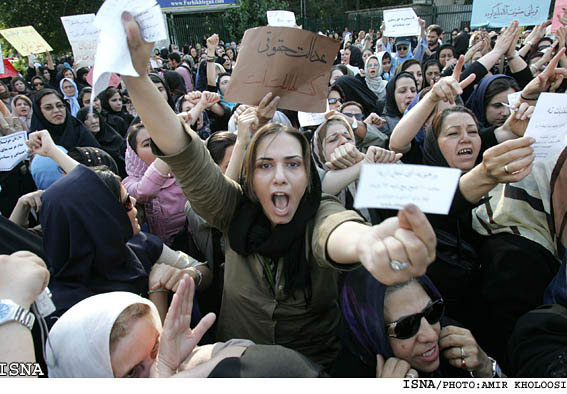 Last spring, strapped in my Economy Plus seat with little to do but munch on 5 cent pretzel packets (yes that’s how much airlines spend on pretzel packets – who doesn’t think emulsified cardboard has to be an ingredient at those prices?) and play Risk on my laptop until the battery died, I first read Khaled Hosseini's A Thousand Splendid Suns and then days later on a trip to the motherland, I finished Barbara Kingsolver's master-piece - The Poisonwood Bible.
Hosseini's better known for The Kite-Runner, a book that touched and saddened me - and that I loved because it ended on a hopeful note. The half smile on the kid's face at the end of the book (if I remember correctly) - was like seeing a brief burst of sunshine during the dreary weeks of cloudiness that sometimes accompany San Francisco winters - enough to remind you that there are sunny days ahead and sometimes enough to drive away any incipient Seasonal Affective Disorder (SAD)-ness.
A Thousand Splendid Suns, has the same setting - Kabul, and similar story elements as the Kite-Runner - brief happiness, quick disillusionment and despair, sadness, extreme loss and devastation and thankfully, ultimate redemption. But its a book worth reading in its own right - because it has two crucial plot-lines that were not there in Hosseini's first book - firstly, the main protagonists remain in Kabul throughout the three decades of death and devastation from the late 70s to the mid-2000s instead of leaving it somewhere at the start of the civil war as happened in the Kite-Runner. And secondly, the protagonists are two women - Mariam and Leila - and not two men/boys. That makes a big difference - because as the book makes clear, while every Afghan, male or female, faced years of violence; for the women the impact was much greater because it was accompanied by a complete loss of social and civil liberties. While no one in the West seems to ever talk about the Communist regime in Afghanistan having any redeeming qualities - the fact was that the Communist era was also the most liberated period for Afghan women – who were encouraged to shun the conditioned prison of the burqa and come out of the house - to study, participate in government and academia, even join the military. Once Najibullah's government fell, and even before the Taliban stormed to power, women were quickly stripped off most of their short-lived freedoms and dressed up once again in their age-old head-to-toe garments. A good way to compare the varying impact on the two sexes, would be two juxtapose two of the many repressive laws introduced by the Taliban that made it to Indian newspapers at the time - The men were forbidden to shave; the women were forbidden to be seen anywhere in public without a man.
The book traces the impact of the turmoil in the country on the lives of the two women protagonists effectively imprisoned in their home by the tyrant they're both married to, who seems to hit them as easily as - and more often than - you or I would swat a pesky fly. As I read the book I was initially surprised by how much time was spent detailing the lives of the two women in their modest two-story domestic prison and comparatively how little time in talking about the repeated rape of Kabul through those years. Until it struck me that perhaps Hosseini was using the women's plight - their rapid descent from the early hope of youth into a hellish triple decade, from relatively healthy beings into bruised, battered, mentally scarred women looking much older than their years as a metaphor for what happened to Kabul. Just as they were imprisoned in their home, Kabul was besieged for years by the Mujahideen and then the Taliban. Just as they were battered repeatedly by their husband, so was Kabul pounded almost daily by mortar and bombs, entire neighbourhoods reduced to rubble. Just as they were left helpless by the medieval laws imposed by the conservative fighters - so were thousands of children orphaned and left to fend for themselves in bombed out shelters, as often abused as they were cared for. The fate of Kabul and its women followed the same terrible trajectory.
I have to admit that I couldn't wait for the book to end. The pace is fast enough - but it felt excruciatingly slow. I was silently begging for an end to the daily trauma being inflicted on these women by their husband. I wanted one of the women to just stab the bastard in his sleep and be done with it. They couldn't, for if the man of the house died, the rest of the household would starve too: Without a man the women could not go to the grocery store to buy food…and they wouldn’t be served even if they managed to risk going alone.
I’ve written about The Poisonwood Bible before – a saga of a woman and her 4 daughters led into 1960s Congo by her husband, an evangelical priest convinced that converting the teeming heathen masses in the Congo was his life’s calling. Because I read it just days after Hosseini's book I was struck by the common thread running through the lives of Orleanna and her four daughters to that of Mariam and Leila even though they were set worlds and decades apart. It didn't matter that she was an American woman living in the Sixties, considered a fairly modern time in that country's history, Orleanna felt just as helpless as the two Afghan women in opposing her husband's will. She failed to stop a cruel man she detested from dragging her and her daughters to a place she couldn’t have cared less about and which she considered wild and dangerous. Orleanna's failure to stand up to her husband eventually led to a tragedy that tore her family apart. In the book Orleanna is also unable, to the end, to explain her helplessness. But the writer leaves no one in doubt, that the reason is centuries of social conditioning that delegated until recently, a secondary status to women and a sense of complete entitlement to men. A social conditioning that was common to the vast majority of societies and countries through the ages.
There are many countries today where the grossest gender inequities have been eliminated. Being aware of them and being the optimistic liberal that I am, for a long time I’ve assumed the gender equality battle to have been won in much of the West as well as in urban pockets of developing countries like India. Oh I knew that in scores of nations women are still just plain oppressed and are prevented from reaching anywhere close to their potential. But even there I assumed it was just a matter of time.
Hosseini and Kingsolver’s novels read in quick succession were a twin epiphany for me: that, according a subordinate position to women seems to be an instinct built into human societies and for this reason, no progress on gender equality can be taken for granted. For when you take a harder look, women strive on a daily basis to establish their credibility, dignity and equality in ways large and small, with family and friends, colleagues at work and society in general. They face legal and cultural humiliations not just in medieval societies like Saudi Arabia (not being able to venture out unless accompanied by a man), but also in moderately conservative ones like India (the dowry system) or relatively modern ones like the US (Upto 30% less pay compared to male workers for equal work).
My friend P told me - in a rather non-dramatic, very matter-of-fact tone, while debating the relative merits of Obama and Clinton last year - that I just couldn't understand what it was like, to be a woman in a man's world and that she felt compelled in almost a visceral way to support Clinton. That visceral instinct for a visible demonstration of full equality in many of Clinton’s supporters sustained her campaign way past its sell-by date. It is also that instinct which will sustain the feminist movement over the decades of struggle that are necessary to ensure that billions of women across the world are no longer denied a shot at a free and fulfilled life. So mock not that instinct, dear reader. For what is truly past its sell-by date, is the patriarchal system that has mistreated the world's largest and longest minority.
Friday, March 6, 2009
How Appropriate
Your rainbow is shaded orange.
What is says about you: You are a strong person. You appreciate a challenge. Others are amazed at how you don't give up.
Find the colors of your rainbow at spacefem.com.
What is says about you: You are a strong person. You appreciate a challenge. Others are amazed at how you don't give up.
Find the colors of your rainbow at spacefem.com.
My rainbow it seems, is shaded orange, which is also my favourite colour. And I did NOT game the quiz at all. This is so cool - maybe there's something subliminal in my liking orange as much as I do.
Wednesday, February 25, 2009
Winds of Change Reach New Zealand As Oppressed Majority Finds a Compelling New Voice
FAKE NEWS ALERT

Might the meek Inherit New Zealand?
The winds of change that swept the United States of America last November have finally reached the shores of a placid, beautiful island country half-way across the world that has become the beachhead of a nascent organization that many human rights experts are calling the beginning of a comprehensive global sentient being rights movement. New Zealand’s sheep have a new leader and his name is BalRam Obaabaa.
New Zealand’s long oppressed ovine population today elected Mr. Obaabaa as leader of an new organization that will spear-head the efforts to improve the living conditions of the sheep in New Zealand. Mr. Obaabaa is exceptionally young for the responsibility he now assumes – he is only 135 years old in human terms or about 35 sheep years (1 human year is equal to 0.2593 sheep years. Sheep age more slowly than humans due to their low cholesterol vegan diet; daily ambles in the country-side and perennially placid personalities). The election of Mr. Obaabaa was by acclamation in a voice vote that was not publicized amongst the country’s human population for fear of disruptions caused by ovinophobes. He owed his unanimous election in some ways to the activities of those same ovino-phobes. Mr. Obaabaa’s principal rival had to withdraw from the race after suggesting a new term for female sheep could be formed by combining the words “she” with “ewe”. His support collapsed when it was revealed that he had joked that a possible way of combining the two words could be “Sh(e)rewe”. The campaign to find a new name for ewes has has widespread support in the female sheep community, many of who dislike being called ewes. They say it is degrading to female sheep since many ovinophobic humans deliberately pronounce the word as “Ewww!” when referring to them.
The sound of the vote resounded through the tiny island – setting off two small avalanches in the higher mountain slopes on North Island and shattering some shop windows in Christchurch where the area’s ewes have long been known for the rather high pitch of their bleats.
In recent years, New Zealand’s minorities including the indigenous Maoris have made some important strides towards winning equal rights and recognition of their unique culture and way of life. However the country’s sheep, which form the country’s largest sentient group and a massive majority, numbering by some counts at 64 per capita or about 128 million, have languished with little change in their deplorable living conditions over the years. Mr. Obaabaa’s election is expected to change that. The sudden developments surprised local observers since the sheep are known for being almost pathologically poor at organization. Sheep dogs (and in at least one instance on an Australian farm, a pig) are employed on a daily basis to keep members of even small herds moving in the same direction - even when it is to the other side where the grass is greener.
Ovine experts are crediting the fact of the election and Mr. Obaabaa’s victory to the news of the US election results in Nov 2008 that put a black man in the President’s office for the first time. “Mr. Obama’s victory has given great hope to oppressed sentient beings everywhere” said Mr. Raymond Cairns an Auckland based human expert in the relatively new field of sentient rights, “There is no doubt that the inspiration from his victory provided the spark that has ignited the fight for their rights by this long, dormant majority.
Local political observers point out that Mr. Obaabaa has many similarities with the new American president. Like Mr. Obama, the new ovine leader is of mixed stock – he has some Indian blood in him from a great-great-great aunt. This similarity is a little tenous since, as genealogists point out, the Indian ancestry has long been diluted down to where Mr. Obaabaa looks and is basically white. He himself identifies as white instead of mixed-stock. However in his early 90s he was widely considered a black sheep by his family for refusing to allow himself to be shorn by his human handlers during the annual shearing season on the grounds that as a sentient being he had full rights to decide when to be shorn and to determine how the wool was then used. Consequently he gained a shaggy appearance and a reputation as a radical; one that was hardened by his open mastication of marijuana leaves whenever he came across a bush growing wild. His close friends, who affectionately call him Ram, say that Mr. Obaabaa, like the US President has moderated his views over time while proving that he can bring change: last year he struck a deal with his human handlers agreeing to being shorn annually albeit at a time of his own choosing. He also won the right to benefit from nearly 40% of the proceeds from the sale of his wool.
Recently more and more sheep have been coming around to the view that they deserve better living conditions including more grazing time and Mr. Obaabaa has benefited from having been one of the very first to voice these demands at a time when they were very unpopular among all kinds of sentients.
The White House refused to comment on the news of Mr. Obaabaa’s election and the role that Mr. Obama’s victory might have played in bringing it about, perhaps in deference to the close relationship between the human leaders of the US and New Zealand. New Zealand’s Conservative Prime Minister, himself newly elected, would only say that he looked forward to holding the ovine leader to his pledge of leading a peaceful and dignified rights movement. He added that defecating in city streets in protest as some ovine radicals have suggested would not meet that bar.
In other moos, it seems Mr. Obaabaa’s election has generated some concerns in the island’s bovine population. Some cows are concerned about the treatment they might receive under a future ovine led government which would be the logical endgame of the newfound sheep rights movement even if its years away. A Jersey cow in the South Island lowed at reporters saying that this was something that the bovine community definitely had to think about and develop a response to. She said that she would get to chewing over it as soon as she figured out which of her four stomachs she’d put the morning’s breakfast in.

Might the meek Inherit New Zealand?
The winds of change that swept the United States of America last November have finally reached the shores of a placid, beautiful island country half-way across the world that has become the beachhead of a nascent organization that many human rights experts are calling the beginning of a comprehensive global sentient being rights movement. New Zealand’s sheep have a new leader and his name is BalRam Obaabaa.
New Zealand’s long oppressed ovine population today elected Mr. Obaabaa as leader of an new organization that will spear-head the efforts to improve the living conditions of the sheep in New Zealand. Mr. Obaabaa is exceptionally young for the responsibility he now assumes – he is only 135 years old in human terms or about 35 sheep years (1 human year is equal to 0.2593 sheep years. Sheep age more slowly than humans due to their low cholesterol vegan diet; daily ambles in the country-side and perennially placid personalities). The election of Mr. Obaabaa was by acclamation in a voice vote that was not publicized amongst the country’s human population for fear of disruptions caused by ovinophobes. He owed his unanimous election in some ways to the activities of those same ovino-phobes. Mr. Obaabaa’s principal rival had to withdraw from the race after suggesting a new term for female sheep could be formed by combining the words “she” with “ewe”. His support collapsed when it was revealed that he had joked that a possible way of combining the two words could be “Sh(e)rewe”. The campaign to find a new name for ewes has has widespread support in the female sheep community, many of who dislike being called ewes. They say it is degrading to female sheep since many ovinophobic humans deliberately pronounce the word as “Ewww!” when referring to them.
The sound of the vote resounded through the tiny island – setting off two small avalanches in the higher mountain slopes on North Island and shattering some shop windows in Christchurch where the area’s ewes have long been known for the rather high pitch of their bleats.
In recent years, New Zealand’s minorities including the indigenous Maoris have made some important strides towards winning equal rights and recognition of their unique culture and way of life. However the country’s sheep, which form the country’s largest sentient group and a massive majority, numbering by some counts at 64 per capita or about 128 million, have languished with little change in their deplorable living conditions over the years. Mr. Obaabaa’s election is expected to change that. The sudden developments surprised local observers since the sheep are known for being almost pathologically poor at organization. Sheep dogs (and in at least one instance on an Australian farm, a pig) are employed on a daily basis to keep members of even small herds moving in the same direction - even when it is to the other side where the grass is greener.
Ovine experts are crediting the fact of the election and Mr. Obaabaa’s victory to the news of the US election results in Nov 2008 that put a black man in the President’s office for the first time. “Mr. Obama’s victory has given great hope to oppressed sentient beings everywhere” said Mr. Raymond Cairns an Auckland based human expert in the relatively new field of sentient rights, “There is no doubt that the inspiration from his victory provided the spark that has ignited the fight for their rights by this long, dormant majority.
Local political observers point out that Mr. Obaabaa has many similarities with the new American president. Like Mr. Obama, the new ovine leader is of mixed stock – he has some Indian blood in him from a great-great-great aunt. This similarity is a little tenous since, as genealogists point out, the Indian ancestry has long been diluted down to where Mr. Obaabaa looks and is basically white. He himself identifies as white instead of mixed-stock. However in his early 90s he was widely considered a black sheep by his family for refusing to allow himself to be shorn by his human handlers during the annual shearing season on the grounds that as a sentient being he had full rights to decide when to be shorn and to determine how the wool was then used. Consequently he gained a shaggy appearance and a reputation as a radical; one that was hardened by his open mastication of marijuana leaves whenever he came across a bush growing wild. His close friends, who affectionately call him Ram, say that Mr. Obaabaa, like the US President has moderated his views over time while proving that he can bring change: last year he struck a deal with his human handlers agreeing to being shorn annually albeit at a time of his own choosing. He also won the right to benefit from nearly 40% of the proceeds from the sale of his wool.
Recently more and more sheep have been coming around to the view that they deserve better living conditions including more grazing time and Mr. Obaabaa has benefited from having been one of the very first to voice these demands at a time when they were very unpopular among all kinds of sentients.
The White House refused to comment on the news of Mr. Obaabaa’s election and the role that Mr. Obama’s victory might have played in bringing it about, perhaps in deference to the close relationship between the human leaders of the US and New Zealand. New Zealand’s Conservative Prime Minister, himself newly elected, would only say that he looked forward to holding the ovine leader to his pledge of leading a peaceful and dignified rights movement. He added that defecating in city streets in protest as some ovine radicals have suggested would not meet that bar.
In other moos, it seems Mr. Obaabaa’s election has generated some concerns in the island’s bovine population. Some cows are concerned about the treatment they might receive under a future ovine led government which would be the logical endgame of the newfound sheep rights movement even if its years away. A Jersey cow in the South Island lowed at reporters saying that this was something that the bovine community definitely had to think about and develop a response to. She said that she would get to chewing over it as soon as she figured out which of her four stomachs she’d put the morning’s breakfast in.
Of Monkeys, Kiwis and Avian Inhabitants of Eden
So I watched a cricket match after more than 5 years - the first India-New Zealand 20-20 match in which India got soundly thrashed by the Kiwis. Some things never change huh :) I watched it on a large screen in an English pub with B and R and three beers to help soften the pain...OK I admit I'd have had the beers even if we were winning.
Anyway, the Indian team, with their lack-lustre bowling attack (for want of a better word), might want to think about visiting the local temple, (or mosque or church for that matter) to seek divine intervention to ward off an impending series white-wash. But if they do, they'd be well-advised to NOT wear their new uniform to the temple - the one being modelled so proudly by Dhoni in this embedded video.
Especially NOT the new sweat-pants which have that rather intriguing orange/red patch on the ass (partly visible in its infinite majesty when poor Dhoni turns around on the ramp). People might pelt them with stones mistaking them for mistake them for human-kind's pesky, distant cousins (pictured below) who often inhabit temple environs and harass hapless worshipers.
 However, I do think there's a designer somewhere who does need to be given a one-way ticket - perhaps on one of the old Sahara Airlines planes - to the Okavango where his talents can be much better utilized designing winter-wear for pet macaques.

Speaking of fauna - R. enticed me to get off my couch and go watch India be routed on a big-screen by telling me about how good looking, the New Zealand team members are. And he was right, case in point being the wicket keeper Brendon McCullum...
Someone tell me why they're called the Kiwis again? I think Birds of Paradise might be a more appropriate appellation.
Anyway, the Indian team, with their lack-lustre bowling attack (for want of a better word), might want to think about visiting the local temple, (or mosque or church for that matter) to seek divine intervention to ward off an impending series white-wash. But if they do, they'd be well-advised to NOT wear their new uniform to the temple - the one being modelled so proudly by Dhoni in this embedded video.
Especially NOT the new sweat-pants which have that rather intriguing orange/red patch on the ass (partly visible in its infinite majesty when poor Dhoni turns around on the ramp). People might pelt them with stones mistaking them for mistake them for human-kind's pesky, distant cousins (pictured below) who often inhabit temple environs and harass hapless worshipers.
 However, I do think there's a designer somewhere who does need to be given a one-way ticket - perhaps on one of the old Sahara Airlines planes - to the Okavango where his talents can be much better utilized designing winter-wear for pet macaques.
Speaking of fauna - R. enticed me to get off my couch and go watch India be routed on a big-screen by telling me about how good looking, the New Zealand team members are. And he was right, case in point being the wicket keeper Brendon McCullum...
Someone tell me why they're called the Kiwis again? I think Birds of Paradise might be a more appropriate appellation.
Wednesday, January 21, 2009
Why I Love San Francisco
 Bush Street in San Francisco is now Obama street! Someone should start a Facebook group to petition the city to actually make the change formal. What say?
Sunday, January 18, 2009
Saving Starfish...One at a Time
THE POWER OF THINKING SMALL
 Barack Obama is apparently going to call for a new age of responsibility in his inaugural address on Tuesday. If anyone can make responsibility cool again its probably him. Obama has proven that he can move millions…hopefully to do the right thing…with just a speech. And he will, I believe - and pray – continue to do so over the next few years.
But what I truly liked about Obama and his campaign was his emphasis on individual action. On his repetition of the cliché – We are the ones we’re looking for. Its apparently an old Navajo saying. And Paulo Coelho allegedly said the same thing (allegedly because I haven’t read the book) in his popularly acclaimed book The Alchemist. Millions of people, inspired by this slogan, amongst others voted Obama in. However I suspect, no matter how many times Obama tells us we need to look within ourselves to find a solution, the truth is that most people will continue to believe that he and only he is the solution.
Here’s the issue. Real leaders are hard to come by. And when they do come around, every other decade or four, they generally focus on inspiring great achievements or finding great solutions to big problems - like landing on the moon. Until the time they depart; whence most societies fall back into a stupor of mediocrity or worse. Fact is, great leaders can paralyze as much as inspire, emasculate as much as they empower. Take landing on the moon for example. The problem with inspiring people to landing on the moon or joining the Peace Corps is that you can only fit so many people in a space-craft and there’s only so many people adventurous and passionate and tie-less enough to head off to war-torn Darfur for the foreseeable future. The vast majority of people find themselves unable to find a role for themselves in these great enterprises of the human spirit and don’t participate in them beyond feeling vaguely inspired. That’s a lot of sparks extinguished; a lot of inspiration gone waste.
People don’t believe the average Joe can drive big changes and so most people don’t try. They just wait around for another inspiring leader to come on by to do it for them. Kennedy gave a fiery inaugural address in which he demanded that every American ask what he/she can do for their country. And though the speech outlived him by decades, the spark he ignited mostly died with him. He was followed by the sixties counter-culture, Vietnam and Nixon – and eventually the ascendance, over the last three decades, of the idea that the pursuit of an individual’s own happiness is the key to prosperity for all. Similarly, Nehru was followed by his dynasty simply because people didn’t really believe they could continue to be the kind of nation they were, without someone like him at the helm.
So how about a leader who demands that everyone, individually, do one or two really small things that make a difference however small, to whichever issue they’re passionate about. Malcolm Gladwell in his brilliant book, The Tipping Point, describes how Mayor Giuliani and a small team reduced crime in New York by nearly 60% in just a few years – “simply” by changing the context in which people dwelled. They cracked down on the smallest of crimes and the “offenders” committing them – panhandlers, graffiti artists, drunks creating a nuisance, people using the subway without a ticket. By making it difficult and costly to commit small crimes, they sent a subliminal signal throughout the city that there was someone in charge and that betting on impunity was a bad idea. In providing a (negative) incentive for each person to be more law-abiding in general they engendered a cultural change that reversed a seemingly irreversible crime wave.
I think we could begin to build a lasting culture of empowerment, if we had great leaders who demanded that every single person – no matter how poor, or unfortunate - pick a cause every year, dear to them, and do something small towards it. They could grow their hair long enough to donate to charities that make free wigs for cancer patients who cannot afford them. They could decide to fight corruption in a small way by resolving to always pay the full traffic fine versus a bribe, or the black market by always paying the sales tax on an item they purchase. They could let a less fortunate neighbour borrow their tool-set so they can get a construction job a la Clint Eastwood in Gran Torino. Or if they are the less fortunate neighbour, they could invite the lonely rich guy next door over to family gatherings. When finding ways of making a positive difference, small or large, becomes a habit, that’s when we may no longer need the occasional inspiring leader to come along to solve our big problems – or maybe we’ll just find that we have many more of them (leaders that is, not problems) - because now millions (instead of thousands) of people believe in themselves and think beyond themselves.
It might seem a little wishy-washy to say that if everyone did small good deeds, that in itself could solve the really complex problems in the world. But think back to how we learn a new language in school. We start with learning the alphabet and then each year we learn how to construct ever larger words and express ever more complex thoughts in sentences. A few people go on to become great writers and orators. But those who don't become great writers/orators - pretty much everyone really - still learn how to do really important and complex things with the language they’ve learned: order a tall, non-fat, caramel macchiato at a Starbucks, tell a joke to a friend needing cheering up, or express their love for those they care for. We take our ability to communicate for granted. But if you think about it, it’s a very complex human achievement. It looks simple, because making magic – mundane or exotic – with words becomes a habit for us. Whats to say, the same thing wouldn’t happen with solving world problems?
A friend related this parable to me recently…A man finds hundreds of starfish stranded and dying on a beach at low tide and moved by their plight starts throwing them into the ocean, one by one. Along comes a fellow and seeing what he’s doing says – “There’s hundreds of them here…you’re never going to make a difference by yourself.” The guy throws one more starfish into the sea and says “I made a difference to that one.” In an ideal world, the other guy would be inspired and join him in throwing the starfish back into the ocean. But even if no more help came, the fact is that there would be fewer needlessly dead starfish because of just the one guy and that would be a good thing (assuming you like starfish, of course).
So you and I can hope, dear reader, that Obama will be the kind of leader who encourages people to do small good deeds as well as inspiring them to large achievements. Or if you buy this theory, perhaps you won’t wait for Obama to do it. Perhaps you could make it a point to tell other people to find a starfish, just one, to throw back into the sea.
Barack Obama is apparently going to call for a new age of responsibility in his inaugural address on Tuesday. If anyone can make responsibility cool again its probably him. Obama has proven that he can move millions…hopefully to do the right thing…with just a speech. And he will, I believe - and pray – continue to do so over the next few years.But what I truly liked about Obama and his campaign was his emphasis on individual action. On his repetition of the cliché – We are the ones we’re looking for. Its apparently an old Navajo saying. And Paulo Coelho allegedly said the same thing (allegedly because I haven’t read the book) in his popularly acclaimed book The Alchemist. Millions of people, inspired by this slogan, amongst others voted Obama in. However I suspect, no matter how many times Obama tells us we need to look within ourselves to find a solution, the truth is that most people will continue to believe that he and only he is the solution.
Here’s the issue. Real leaders are hard to come by. And when they do come around, every other decade or four, they generally focus on inspiring great achievements or finding great solutions to big problems - like landing on the moon. Until the time they depart; whence most societies fall back into a stupor of mediocrity or worse. Fact is, great leaders can paralyze as much as inspire, emasculate as much as they empower. Take landing on the moon for example. The problem with inspiring people to landing on the moon or joining the Peace Corps is that you can only fit so many people in a space-craft and there’s only so many people adventurous and passionate and tie-less enough to head off to war-torn Darfur for the foreseeable future. The vast majority of people find themselves unable to find a role for themselves in these great enterprises of the human spirit and don’t participate in them beyond feeling vaguely inspired. That’s a lot of sparks extinguished; a lot of inspiration gone waste.
People don’t believe the average Joe can drive big changes and so most people don’t try. They just wait around for another inspiring leader to come on by to do it for them. Kennedy gave a fiery inaugural address in which he demanded that every American ask what he/she can do for their country. And though the speech outlived him by decades, the spark he ignited mostly died with him. He was followed by the sixties counter-culture, Vietnam and Nixon – and eventually the ascendance, over the last three decades, of the idea that the pursuit of an individual’s own happiness is the key to prosperity for all. Similarly, Nehru was followed by his dynasty simply because people didn’t really believe they could continue to be the kind of nation they were, without someone like him at the helm.
So how about a leader who demands that everyone, individually, do one or two really small things that make a difference however small, to whichever issue they’re passionate about. Malcolm Gladwell in his brilliant book, The Tipping Point, describes how Mayor Giuliani and a small team reduced crime in New York by nearly 60% in just a few years – “simply” by changing the context in which people dwelled. They cracked down on the smallest of crimes and the “offenders” committing them – panhandlers, graffiti artists, drunks creating a nuisance, people using the subway without a ticket. By making it difficult and costly to commit small crimes, they sent a subliminal signal throughout the city that there was someone in charge and that betting on impunity was a bad idea. In providing a (negative) incentive for each person to be more law-abiding in general they engendered a cultural change that reversed a seemingly irreversible crime wave.
I think we could begin to build a lasting culture of empowerment, if we had great leaders who demanded that every single person – no matter how poor, or unfortunate - pick a cause every year, dear to them, and do something small towards it. They could grow their hair long enough to donate to charities that make free wigs for cancer patients who cannot afford them. They could decide to fight corruption in a small way by resolving to always pay the full traffic fine versus a bribe, or the black market by always paying the sales tax on an item they purchase. They could let a less fortunate neighbour borrow their tool-set so they can get a construction job a la Clint Eastwood in Gran Torino. Or if they are the less fortunate neighbour, they could invite the lonely rich guy next door over to family gatherings. When finding ways of making a positive difference, small or large, becomes a habit, that’s when we may no longer need the occasional inspiring leader to come along to solve our big problems – or maybe we’ll just find that we have many more of them (leaders that is, not problems) - because now millions (instead of thousands) of people believe in themselves and think beyond themselves.
It might seem a little wishy-washy to say that if everyone did small good deeds, that in itself could solve the really complex problems in the world. But think back to how we learn a new language in school. We start with learning the alphabet and then each year we learn how to construct ever larger words and express ever more complex thoughts in sentences. A few people go on to become great writers and orators. But those who don't become great writers/orators - pretty much everyone really - still learn how to do really important and complex things with the language they’ve learned: order a tall, non-fat, caramel macchiato at a Starbucks, tell a joke to a friend needing cheering up, or express their love for those they care for. We take our ability to communicate for granted. But if you think about it, it’s a very complex human achievement. It looks simple, because making magic – mundane or exotic – with words becomes a habit for us. Whats to say, the same thing wouldn’t happen with solving world problems?
A friend related this parable to me recently…A man finds hundreds of starfish stranded and dying on a beach at low tide and moved by their plight starts throwing them into the ocean, one by one. Along comes a fellow and seeing what he’s doing says – “There’s hundreds of them here…you’re never going to make a difference by yourself.” The guy throws one more starfish into the sea and says “I made a difference to that one.” In an ideal world, the other guy would be inspired and join him in throwing the starfish back into the ocean. But even if no more help came, the fact is that there would be fewer needlessly dead starfish because of just the one guy and that would be a good thing (assuming you like starfish, of course).
So you and I can hope, dear reader, that Obama will be the kind of leader who encourages people to do small good deeds as well as inspiring them to large achievements. Or if you buy this theory, perhaps you won’t wait for Obama to do it. Perhaps you could make it a point to tell other people to find a starfish, just one, to throw back into the sea.
Monday, January 5, 2009
The Pros and Cons of Shiny Elbows

And you thought he found this fire-fly lit path that no one knew about?
So the other day on a cold beach in the Big Sur or maybe it was San Diego, my friend 3D commented on how dirty my elbows were. As you might expect, it led to a bit of an indignant exchange between us which ended with the others being brought into the conversation to help us compare whose elbows were cleaner. Turns out, 3D beat everyone hollow - not because he has cleaner elbows, but simply because a life-time's worth of scrubbing them in the shower has produced a pair of preternaturally shiny elbows on him. The appearance of the shiny pink elbows sparked off a bit of a debate on whether these provided a net advantage for their possessor or a net disadvantage. While we didn't have sufficient time that particular day to fully discuss the merits or lack there-of of unnaturally shiny elbows, I've had time since then to carry out fairly extensive and diligent research and also put some thought into it. Its valuable to spend some time understanding this subject not simply because there are some great career ideas for OSEs but also because of its impact on the debate about evolution. (For sake of brevity I shall refer to the owner of the shiny elbows as OSEs in the remainder of this post)
Pros of Exceedingly Shiny Elbows:
a) You don't need to carry torches when exploring the caves of La Jolla in kayaks...The OSE can simply lead the way
b) If your breaklights fail, a friendly OSE can be installed in the rear seat of the car and requested to sit with shoulders spread along the back-rest, elbows pointing backwards and out of the rear wind-screen
c) When lost flint-less in the woods, the OSE can use his/her elbows to concentrate sunlight on kindling and light a fire to roast the assorted snails that've been caught. The game-show Survivor is believed to have rules prohibiting known OSEs from participating in it - due to the unfair advantage that they gain from an OCD(Obsessive Compulsive Disorder)-level propensity to scrub.
d) A throng of salaried OSEs hiding in bushes lining a winding path, elbows pointing outwards, can help create a beautiful, romantic back-drop for a Valentine-night stroll when fire-flies are in short supply. Creating and managing OSE-lit events could very well be the next sunrise industry - except they'd be most effective at sunset.
e) When lost at sea, OSEs can use their elbows to send out SOS signals using Morse code - intimating passing ships about their where-abouts. For this reason, OSEs are known to survive in greater numbers during ship-wrecks than those not blessed with super-shiny elbows.
Cons of Especially Shiny Elbows:
Given the multiple substantial benefits that shiny elbows seem to provide, one would expect, assuming that Darwin was correct, that there would be a much higher number of people obsessively scrubbing elbows in showers or (for the lazy ones amongst us) rubbing phosphorus onto them. The reason that is not so, I believe, is due to the even greater drawbacks that unusually shiny elbows have.
Anthropologists and ethnographers estimate that the OSE population probably peaked in the Palaeolithic age when fire had been discovered but means of making it were not easily available. Shiny elbows were considered an asset for a short period due to their utility in starting a fire to cook the day’s hunt. However scrubbing while showering quickly declined as a practice once it became clear that, once the fire was out and darkness had rolled back in; significantly shiny elbows helped mammoths and saber-toothed tigers find much-needed nourishment.
In modern times, the absence of laws against smoking-while-driving are responsible for maintaining an evolutionary check on OSE populations. Sitting in the car with the windows rolled down and smoking a cigarette has been known to cause many an accident due to the temporary blinding effect of the elbows on drivers in the vehicles traveling behind the OSE. The low numbers of OSEs therefore actually provide backing, rather than a challenge, for the theory of evolution.
In these times of religious intolerance where the existence of the Flying Sphaggeti Monster is disputed and the validity of the theory of evolution challenged on a daily basis; every piece of evidence that can be brought to bear on the side of science is an invaluable addition to the side of rationality and tolerance. So while by themselves scarily shiny elbows might not be an asset to their owners, they do provide, by their very existence, a net benefit to society.
Tuesday, December 30, 2008
Non-PC Joke of the Year
Q: How do you tell a Bangladeshi man from an Indian or Pakistani man?
A: He's the one wearing a life-jacket just in case a flood comes along
A: He's the one wearing a life-jacket just in case a flood comes along
Subscribe to:
Posts (Atom)