Take a gander.
Showing posts with label Prop 8. Show all posts
Thursday, July 11, 2013
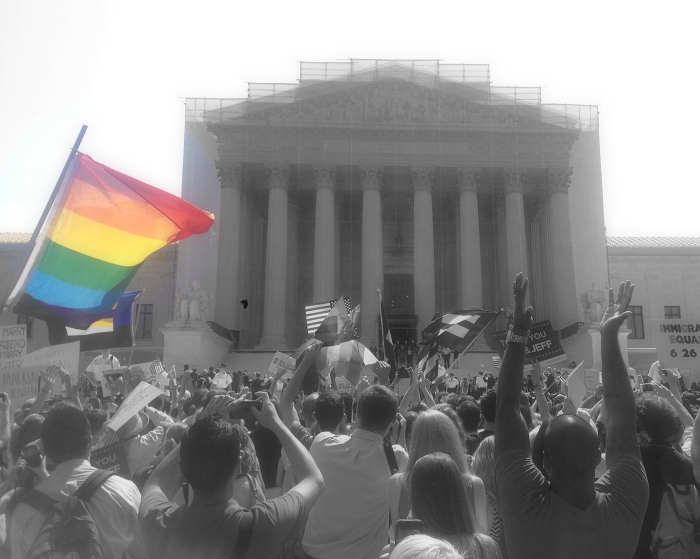
The Evisceration of DOMA and why It's Important
Take a gander.
Labels:
California,
DoMA,
gay marriage,
gay rights,
Immigration Equality,
marriage equality,
Prop 8,
SCOTUS
Tuesday, August 24, 2010
The Daily Dish Needs to Serve Up a Recantation
When the California Supreme Court upheld Prop 8, prominent, gay, conservative blogger who prides himself on constantly trying to see what's in front of his nose, wrote in a post titled: Prop8 Ruling: The Right Call that it was a "perfect decision" since "It would have been dreadful if voters were retroactively told their valid vote was somehow null and void - it would have felt like a bait and switch and provoked a horrible backlash." Sullivan's a blogger I read quite often. He's always passionately opinionated - right on many issues, badly wrong on a few very important ones like the Iraq War (which he backed vociferously and then, to his credit, apologised for) and just plain, egregiously nasty on some - like his support for removing the transgender community from ENDA.
He's a bit of a lapsed conservative who clambered onto the Obama's bandwagon early on - at least partly because of his apparently deep detest for the Clintons - but his roots show every now and then, as in his reaction to the California SC Prop 8 ruling, which harks back to the ridiculous position of many conservatives in the US that people's will must supersede the courts' even on a question related to fundamental rights. The post surprised me because if nothing else Sullivan claims to be a keen observer and advocate of democracy (witness his vigorous and useful support for the Green Revolution in Iran last year and his posts in support of the "Ground Zero Mosque")- apparently he sat through only half the civics 101 lesson related to democracy being about the rule of the majority while skipping the part about minority rights being guaranteed.
Having ecstatically welcomed both the initial gay marriage ruling by the California SC and then in a more muted way Judge Walker's recent ruling invalidating Prop 8 - Sullivan should really be admitting to being wrong - in welcoming the ruling that upheld prop 8 and wrong in his understanding of how a democracy should work. You can't be the most prominent conservative, gay blogger on the internets writing primarily on politics and policy and be so wrong without admitting it, if you are to retain your credibility. And if doesn't think he was wrong, then it would be a great idea to state that as well and have his reader's debate him on the merits of his position.
Appending his original statement welcoming Prop 8 being upheld to his recantation would be a great idea. I've linked to it in case he has trouble locating it in the prolific archives of the Daily Dish.
Tuesday, August 17, 2010
A Very Long Engagement
And A Very Long Post. :( I did try to shorten it, I promise I did
What’s in a name, the Bard famously asked a couple of centuries ago. And today that refrain has been taken up by those members of the religious right who just cannot und
erstand why domestic partnerships or civil unions in states like California or New Jersey aren’t good enough for the gay community. Why do they need to horn in on an institution that for eons and in nearly every civilization known to man, has undeniably involved a commitment between a man and a woman. Some of my straight friends, all liberal, have asked me the same question. And when I first moved to the US from India, fresh out of the closet, I kind of agreed with them. I didn’t think it was really important to call a domestic partnership a marriage. Let me explain.
It took me some time to fully absorb the fact that I’d moved to a place where virtually nobody cared about your sexual orientation – unless they were sizing you up for a date or a hook-up. It first hit me that I wasn't in Kanpur anymore, when after a full day of apartment-hunting, I found one that I loved: a fourth floor walk-up with warm,worn hardwood floors, no dish-washer and a view of the Golden Gate. As we walked down the four floors, I told the realtor that I wanted to rent it. Then I told her was gay and asked her if this was something we needed to reveal to the apartment-owner in case he didn’t want to rent to gay people, since I’d hate to star in an eviction drama on local news. My coming out did not faze her a bit, but my question clearly took her aback. When she recovered, she told me, firmly, that my being gay was none of the landlord’s business and that anyway there were anti-discrimination laws that prevented him from refusing to rent the apartment to me. Over time as I learned of all the other protections, and the freedoms – no – the Freedom, available to me to live like any other person, in California, it just seemed greedy to quibble over whether two lovers’ union should be called marriage or domestic partnership – specially when all the benefits were the same.
I was OK with joining up with the folks demanding gay marriage because to me it was a civil rights issue. I could see that the opposition, despite the welter of rational-sounding irrational reasons they put forward, really just felt that heterosexuals were better than homosexuals and wanted to validation for their feelings in the form of a discriminatory marriage law. It made sense to oppose such bullying, just as it makes sense to oppose attempts to block a mosque near Ground Zero. Despite being in favour of same-sex marriage, I didn’t really think it made a difference to me personally. My (over?)-healthy self-esteem, I felt, allowed me to not care what the opposition thought of domestic partnerships. As I saw it, when I found the right guy, we could probably have any kind of religious or secular ceremony we wanted; I was blessed with family and friends who would still attend and who would consider it as important a wedding as theirs; and the only thing that would be different would be a few words on a document that we’d never look at, after the day of.
That started changing when the first decision legalizing gay marriage was handed down by the California Supreme Court. I remember whooping with joy as goose-bumps clambered up and down my back. But I also suddenly felt scared. I was quite ready for a domestic partnership but somehow marriage seemed to have a whole lot more responsibility associated with it; something I hadn't felt until I was given access to it. It was a small shock to learn that I had the same attitude vis-a-vis marriage and domestic partnerships as the conservatives on the other side. I realized that while I understood marriage viscerally - having grown up in it and with it - I only had an intellectual understanding of a DP.
Yes, legally a California DP is exactly the same as a marriage where state law is concerned – but we don’t live in courts. We live in condominiums. In class-rooms and cafes. In all those places, we grow up laughing, talking, crying and learning about love and marriage, not love and DPs. Whether we accept or reject marriage as an institution, we involuntarily absorb and come to understand the value that society places on marriage. My self-esteem hadn't immunised me to social conditioning. My brain still told me that a DP was exactly the same as a marriage - at least at the state level. But that did not ring true for me anymore. Much as I disliked admitting it - marriage, to me, was a more important, more serious commitment. I knew it because my gut told me so.
A few months ago, bereft again of the option to marry, post-Prop8, I found out that my friends, liberals like me, have the same opinion-versus-attitude dissonance as I did. And are unaware of it just as I was. I was at a dinner at one of my closest friend’s house. He’d recently fallen in love with a wonderful girl. I haven’t known her for long but you can tell she’s not just good people. She’s very good people. He is Indian (let’s call him Ritesh) and she is American (let’s call her Angela). Both are as liberal as they come. As the party broke up, they saw us off to the door and as we were saying goodbyes, one of them happened to mention that they’d gone to City Hall that morning and become domestic partners. Astonished by the news and delighted for my friend, I instantly congratulated them on this huge step in their relationship. And then asked why they hadn’t said anything till then, and why we hadn’t celebrated the event. Ritesh shrugged. It was really just to help Angela get on his health plan, he said.
It took a few moments for this to compute. He was saying it didn’t necessarily mark a new step in their relationship – it was more like letting a girl-friend use your car when hers breaks down. I don't think they noticed - but I felt my face redden - I felt embarrassed and foolish. Embarrassed for having thought that their relationship was further along (effectively married!) - than it was. Foolish because, while for me entering into a DP was still a very significant commitment, for them it was less consequential than getting a driver’s license (something that would have merited a mention and a high-five, way earlier in the evening). I felt a bit like an colonial era African chief who, having happily settled for important-looking, colourful beads in exchange for his lands, steps out to find the polite settler kids playing a game of marbles with beads just like his.
When I asked Ritesh if he’d told his parents, he said he had but they hadn’t quite understood what a DP was, and so he told them it was like getting engaged. I didn't point out that it was considerably less than an engagement, really, since it was sans rings, celebrations or excited descriptions of the moment the proposal was made. Hell, it was sans a proposal! But I did think that he was in the right ball-park about a DP's visceral importance relative to marriage, for many, many people. It's really just an engagement.
Del Martin and Phyllis Lyon, the first LGBT couple married by Mayor Newsom in 2004, were together for 53 years. As any woman would attest and many men will admit - that is a very long engagement.
And not something that anyone - gay or straight, American or Indian or Aleutian - would want for themselves. Or put up with.
What’s in a name, the Bard famously asked a couple of centuries ago. And today that refrain has been taken up by those members of the religious right who just cannot und
It took me some time to fully absorb the fact that I’d moved to a place where virtually nobody cared about your sexual orientation – unless they were sizing you up for a date or a hook-up. It first hit me that I wasn't in Kanpur anymore, when after a full day of apartment-hunting, I found one that I loved: a fourth floor walk-up with warm,worn hardwood floors, no dish-washer and a view of the Golden Gate. As we walked down the four floors, I told the realtor that I wanted to rent it. Then I told her was gay and asked her if this was something we needed to reveal to the apartment-owner in case he didn’t want to rent to gay people, since I’d hate to star in an eviction drama on local news. My coming out did not faze her a bit, but my question clearly took her aback. When she recovered, she told me, firmly, that my being gay was none of the landlord’s business and that anyway there were anti-discrimination laws that prevented him from refusing to rent the apartment to me. Over time as I learned of all the other protections, and the freedoms – no – the Freedom, available to me to live like any other person, in California, it just seemed greedy to quibble over whether two lovers’ union should be called marriage or domestic partnership – specially when all the benefits were the same.
I was OK with joining up with the folks demanding gay marriage because to me it was a civil rights issue. I could see that the opposition, despite the welter of rational-sounding irrational reasons they put forward, really just felt that heterosexuals were better than homosexuals and wanted to validation for their feelings in the form of a discriminatory marriage law. It made sense to oppose such bullying, just as it makes sense to oppose attempts to block a mosque near Ground Zero. Despite being in favour of same-sex marriage, I didn’t really think it made a difference to me personally. My (over?)-healthy self-esteem, I felt, allowed me to not care what the opposition thought of domestic partnerships. As I saw it, when I found the right guy, we could probably have any kind of religious or secular ceremony we wanted; I was blessed with family and friends who would still attend and who would consider it as important a wedding as theirs; and the only thing that would be different would be a few words on a document that we’d never look at, after the day of.
That started changing when the first decision legalizing gay marriage was handed down by the California Supreme Court. I remember whooping with joy as goose-bumps clambered up and down my back. But I also suddenly felt scared. I was quite ready for a domestic partnership but somehow marriage seemed to have a whole lot more responsibility associated with it; something I hadn't felt until I was given access to it. It was a small shock to learn that I had the same attitude vis-a-vis marriage and domestic partnerships as the conservatives on the other side. I realized that while I understood marriage viscerally - having grown up in it and with it - I only had an intellectual understanding of a DP.
Yes, legally a California DP is exactly the same as a marriage where state law is concerned – but we don’t live in courts. We live in condominiums. In class-rooms and cafes. In all those places, we grow up laughing, talking, crying and learning about love and marriage, not love and DPs. Whether we accept or reject marriage as an institution, we involuntarily absorb and come to understand the value that society places on marriage. My self-esteem hadn't immunised me to social conditioning. My brain still told me that a DP was exactly the same as a marriage - at least at the state level. But that did not ring true for me anymore. Much as I disliked admitting it - marriage, to me, was a more important, more serious commitment. I knew it because my gut told me so.
A few months ago, bereft again of the option to marry, post-Prop8, I found out that my friends, liberals like me, have the same opinion-versus-attitude dissonance as I did. And are unaware of it just as I was. I was at a dinner at one of my closest friend’s house. He’d recently fallen in love with a wonderful girl. I haven’t known her for long but you can tell she’s not just good people. She’s very good people. He is Indian (let’s call him Ritesh) and she is American (let’s call her Angela). Both are as liberal as they come. As the party broke up, they saw us off to the door and as we were saying goodbyes, one of them happened to mention that they’d gone to City Hall that morning and become domestic partners. Astonished by the news and delighted for my friend, I instantly congratulated them on this huge step in their relationship. And then asked why they hadn’t said anything till then, and why we hadn’t celebrated the event. Ritesh shrugged. It was really just to help Angela get on his health plan, he said.
It took a few moments for this to compute. He was saying it didn’t necessarily mark a new step in their relationship – it was more like letting a girl-friend use your car when hers breaks down. I don't think they noticed - but I felt my face redden - I felt embarrassed and foolish. Embarrassed for having thought that their relationship was further along (effectively married!) - than it was. Foolish because, while for me entering into a DP was still a very significant commitment, for them it was less consequential than getting a driver’s license (something that would have merited a mention and a high-five, way earlier in the evening). I felt a bit like an colonial era African chief who, having happily settled for important-looking, colourful beads in exchange for his lands, steps out to find the polite settler kids playing a game of marbles with beads just like his.
When I asked Ritesh if he’d told his parents, he said he had but they hadn’t quite understood what a DP was, and so he told them it was like getting engaged. I didn't point out that it was considerably less than an engagement, really, since it was sans rings, celebrations or excited descriptions of the moment the proposal was made. Hell, it was sans a proposal! But I did think that he was in the right ball-park about a DP's visceral importance relative to marriage, for many, many people. It's really just an engagement.
Del Martin and Phyllis Lyon, the first LGBT couple married by Mayor Newsom in 2004, were together for 53 years. As any woman would attest and many men will admit - that is a very long engagement.
And not something that anyone - gay or straight, American or Indian or Aleutian - would want for themselves. Or put up with.
Labels:
Civil Liberties,
Del Martin,
gay marriage,
Phyllis Lyon,
Prop 8,
same-sex marriage
Tuesday, October 27, 2009
Indecent Proposition
Belated Bemoaning of a Bad Decision
This May, just a couple of days after the anniversary of the White Night riots in San Francisco, the California Supreme Court delivered its judgement on the constitutionality of Proposition 8. Perhaps fittingly, the verdict was another miscarriage of justice. A mean-spirited proposition that sought to take away hard won marriage rights from same-sex couples has ended up vitiating California’s constitution and stained the California Supreme Court’s otherwise immaculate record as a bulwark against minority discrimination.
The question before the court was fairly simple. In layman’s language, the court
was asked to rule whether Proposition 8, which amended the constitution to ban
gay-marriage, represented such a significant change to the constitution that it
needed to first be passed by the California legislature before being put on the ballot for a popular referendum—something that stood not a whit of a chance in the
Democrat-dominated body.
In its landmark ruling in May 2008, the court had legalized gay marriage on the
grounds that marriage was a fundamental right under the state’s constitution and
that the LGBT community was a “suspect” class; a term that essentially classified them as a minority that has been or is being discriminated against.
Yet, only twelve months after their historic verdict in favour of gay marriage
on the grounds of fundamental rights to equality guaranteed by the constitution,
the judges came to the conclusion that the changes wrought by the Proposition were
not significant enough as to cause them to overturn it.
This writer was not surprised by this ruling: the judges had betrayed their direction
during the legal hearings in the case in March. Judge Joyce Kennard, who ruled in
favour of gay marriage in the 5-4 verdict, for example, commented that there was
just no precedent for overturning a proposition. But one doesn’t have to be gay or member of a minority to find their conclusion dangerously flawed when taken together with their May 8 ruling.
Flawed, because Proposition 8 is unique in the way it has changed the California constitution. It is the first time that something the court termed discriminatory has been written into the document. In that sense it is unprecedented. By passing Proposition 8 California voters were not fine-tuning the constitution but, perhaps unwittingly for many, shredding it’s guarantee of minority rights. In this layperson’s view, that seems like a pretty darn big change to the document in question.
Dangerous, because having upheld Proposition 8, the court has opened the door for
other anti-minority amendments to be put on future popular ballots. For example, a
future ballot could take the Mormon community’s right to marriage away. This may
sound far-fetched, but the Mormons are an even smaller minority than the LGBT
community; and the conservative Christian organizations that were a key proponent
of Proposition 8 are often as prejudiced against the “Mormon cult” as they
are against “the gays.” It wasn’t just a sense of solidarity that drove other minority organizations like NAACP to petition the court to overturn Proposition 8.
After the court upheld Proposition 8, some commentators and activists on both sides of the issue (including prominent gay blogger Andrew Sullivan) came to the conclusion
that having won in a electoral fight, fair and square, democratic principles required
that Proposition 8 be allowed to stand instead of being overturned by an ‘activist’
court. They are wrong.
The view that the ultimate arbiter of laws in a democracy is the electorate betrays a
shallow understanding. Democracy is not defined solely by majority rule. Rather, it is majority rule accompanied by a guarantee of minority rights. This guarantee is not
provided by the electoral process, but by the judiciary. The judiciary exists not because it is practical—to substitute for referendums whenever a law’s constitutionality is brought into question—but because it is necessary to place a check on a majority’s power.
The judges, all steeped in decades of legal practice, could hardly have missed
the implications of what they were doing. So what could have prompted such a
decision? The answer perhaps lies in the fact that in California judges are not just
judges; they are also politicians. California voters periodically decide whether or not California Supreme Court judges will be retained—and several judges were threatened with electoral challenges if they dared
to overturn the “will of the people.” In July 2008, in a case that surprisingly did
not make a splash at the time, the court was asked to disallow Proposition 8 from
being placed on the ballot on the same grounds. This was way before the election
and just after the court’s legalization of gay marriage. The hearings on that case
were held in camera—that is, they were not open to the public—unlike any of the
other hearings in cases related to the issue. The court’s brief decision to dismiss the petition was announced within a few days.In essence, the judges upheld the validity of Proposition 8 in the middle of last year with no elaboration. On the same question, the judges took more than three months to come to the same conclusion this year and wrote reams of justifications. In May 2008, the court went out on a limb by being brave enough to overturn the law banning gay marriage that had been passed in 2000 by more than 60% of the California voters. The furtive way in which July 8 verdict was pronounced compels speculation that the court was hoping (and expecting like many liberals) to get popular validation for their historic decision, assuming that sufficient Californians had changed their minds since 2000.
Having shown their fidelity to their judicial responsibilities, the judges then flirted with popular approval by allowing Proposition 8 to be placed on the November 2008 ballot—a decision that blew up in their faces. Like Demi Moore’s character in the 1993 movie, Indecent Proposal, the judges lost both objects of their desire—their judicial integrity as well as popular respect (the Left is disappointed and embarrassed by the court; and no court can ever be non-activist enough to please the Right unless they rule themselves out of existence). Meanwhile, an abhorrent proposition is now writ into a once-proud state’s constitution. There is little doubt in my mind that a subsequent election on this issue will reverse the law in favour of same-sex marriage, perhaps as early as 2010. But I would rather that the Proposition 8 decision be reversed in the courts, not in the electoral arena as the unlikely pair, Theodore B. Olson and David Boies, are now trying to do by challenging the California Prop 8 decision in Federal courts.
Most LGBT advocacy groups are against the move for fear of ultimately losing in the
conservative-leaning US Supreme Court. However, it is critical to win this case in the courts, because the primacy of the judiciary in safeguarding minority rights and its role as a check on majority rule needs to be reestablished, not weakened further.
And because the only thing more indecent than the Proposition’s intent in this whole affair, has been the California Supreme Court’s dalliance with its political instincts.
This May, just a couple of days after the anniversary of the White Night riots in San Francisco, the California Supreme Court delivered its judgement on the constitutionality of Proposition 8. Perhaps fittingly, the verdict was another miscarriage of justice. A mean-spirited proposition that sought to take away hard won marriage rights from same-sex couples has ended up vitiating California’s constitution and stained the California Supreme Court’s otherwise immaculate record as a bulwark against minority discrimination.
The question before the court was fairly simple. In layman’s language, the court
was asked to rule whether Proposition 8, which amended the constitution to ban
gay-marriage, represented such a significant change to the constitution that it
needed to first be passed by the California legislature before being put on the ballot for a popular referendum—something that stood not a whit of a chance in the
Democrat-dominated body.
In its landmark ruling in May 2008, the court had legalized gay marriage on the
grounds that marriage was a fundamental right under the state’s constitution and
that the LGBT community was a “suspect” class; a term that essentially classified them as a minority that has been or is being discriminated against.
Yet, only twelve months after their historic verdict in favour of gay marriage
on the grounds of fundamental rights to equality guaranteed by the constitution,
the judges came to the conclusion that the changes wrought by the Proposition were
not significant enough as to cause them to overturn it.
This writer was not surprised by this ruling: the judges had betrayed their direction
during the legal hearings in the case in March. Judge Joyce Kennard, who ruled in
favour of gay marriage in the 5-4 verdict, for example, commented that there was
just no precedent for overturning a proposition. But one doesn’t have to be gay or member of a minority to find their conclusion dangerously flawed when taken together with their May 8 ruling.
Flawed, because Proposition 8 is unique in the way it has changed the California constitution. It is the first time that something the court termed discriminatory has been written into the document. In that sense it is unprecedented. By passing Proposition 8 California voters were not fine-tuning the constitution but, perhaps unwittingly for many, shredding it’s guarantee of minority rights. In this layperson’s view, that seems like a pretty darn big change to the document in question.
Dangerous, because having upheld Proposition 8, the court has opened the door for
other anti-minority amendments to be put on future popular ballots. For example, a
future ballot could take the Mormon community’s right to marriage away. This may
sound far-fetched, but the Mormons are an even smaller minority than the LGBT
community; and the conservative Christian organizations that were a key proponent
of Proposition 8 are often as prejudiced against the “Mormon cult” as they
are against “the gays.” It wasn’t just a sense of solidarity that drove other minority organizations like NAACP to petition the court to overturn Proposition 8.
After the court upheld Proposition 8, some commentators and activists on both sides of the issue (including prominent gay blogger Andrew Sullivan) came to the conclusion
that having won in a electoral fight, fair and square, democratic principles required
that Proposition 8 be allowed to stand instead of being overturned by an ‘activist’
court. They are wrong.
The view that the ultimate arbiter of laws in a democracy is the electorate betrays a
shallow understanding. Democracy is not defined solely by majority rule. Rather, it is majority rule accompanied by a guarantee of minority rights. This guarantee is not
provided by the electoral process, but by the judiciary. The judiciary exists not because it is practical—to substitute for referendums whenever a law’s constitutionality is brought into question—but because it is necessary to place a check on a majority’s power.
The judges, all steeped in decades of legal practice, could hardly have missed
the implications of what they were doing. So what could have prompted such a
decision? The answer perhaps lies in the fact that in California judges are not just
judges; they are also politicians. California voters periodically decide whether or not California Supreme Court judges will be retained—and several judges were threatened with electoral challenges if they dared
to overturn the “will of the people.” In July 2008, in a case that surprisingly did
not make a splash at the time, the court was asked to disallow Proposition 8 from
being placed on the ballot on the same grounds. This was way before the election
and just after the court’s legalization of gay marriage. The hearings on that case
were held in camera—that is, they were not open to the public—unlike any of the
other hearings in cases related to the issue. The court’s brief decision to dismiss the petition was announced within a few days.In essence, the judges upheld the validity of Proposition 8 in the middle of last year with no elaboration. On the same question, the judges took more than three months to come to the same conclusion this year and wrote reams of justifications. In May 2008, the court went out on a limb by being brave enough to overturn the law banning gay marriage that had been passed in 2000 by more than 60% of the California voters. The furtive way in which July 8 verdict was pronounced compels speculation that the court was hoping (and expecting like many liberals) to get popular validation for their historic decision, assuming that sufficient Californians had changed their minds since 2000.
Having shown their fidelity to their judicial responsibilities, the judges then flirted with popular approval by allowing Proposition 8 to be placed on the November 2008 ballot—a decision that blew up in their faces. Like Demi Moore’s character in the 1993 movie, Indecent Proposal, the judges lost both objects of their desire—their judicial integrity as well as popular respect (the Left is disappointed and embarrassed by the court; and no court can ever be non-activist enough to please the Right unless they rule themselves out of existence). Meanwhile, an abhorrent proposition is now writ into a once-proud state’s constitution. There is little doubt in my mind that a subsequent election on this issue will reverse the law in favour of same-sex marriage, perhaps as early as 2010. But I would rather that the Proposition 8 decision be reversed in the courts, not in the electoral arena as the unlikely pair, Theodore B. Olson and David Boies, are now trying to do by challenging the California Prop 8 decision in Federal courts.
Most LGBT advocacy groups are against the move for fear of ultimately losing in the
conservative-leaning US Supreme Court. However, it is critical to win this case in the courts, because the primacy of the judiciary in safeguarding minority rights and its role as a check on majority rule needs to be reestablished, not weakened further.
And because the only thing more indecent than the Proposition’s intent in this whole affair, has been the California Supreme Court’s dalliance with its political instincts.
Subscribe to:
Posts (Atom)